
Last updated November 14, 2026
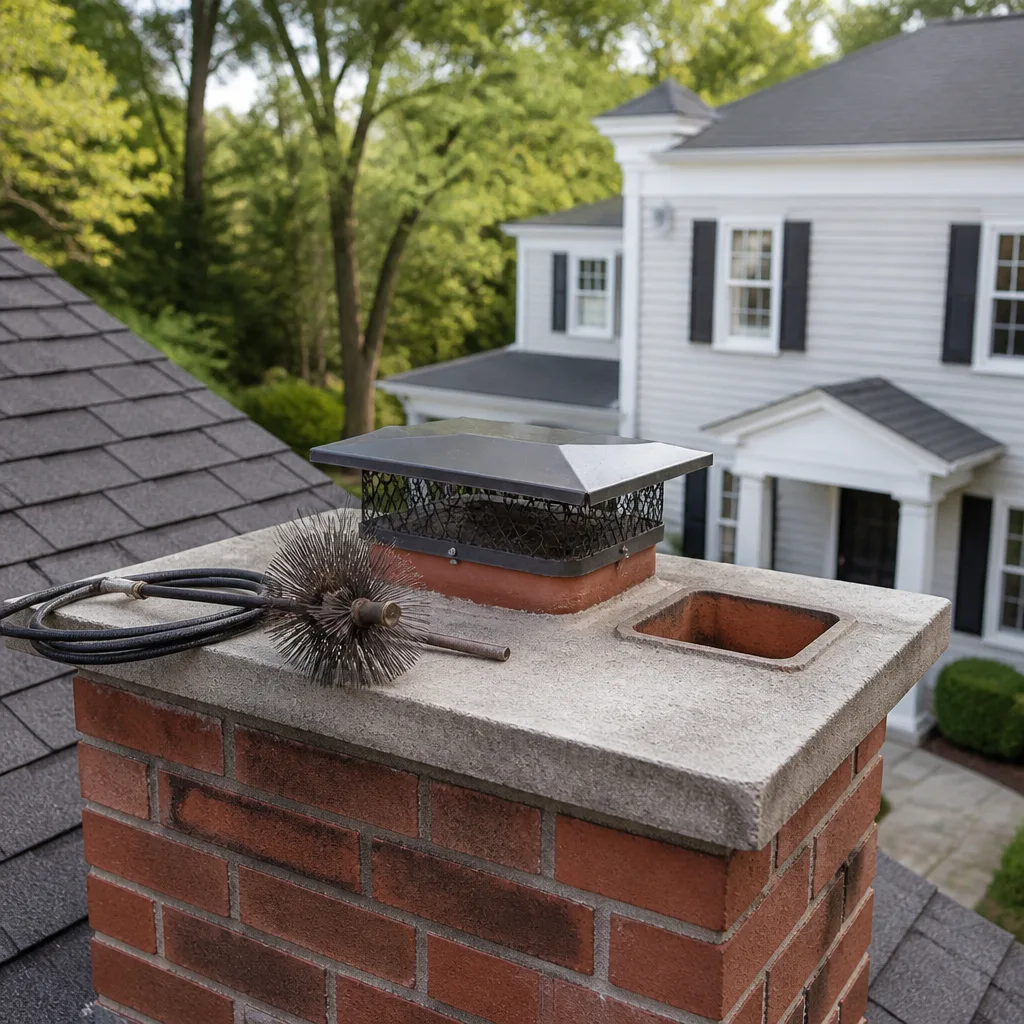 Sweep & inspection
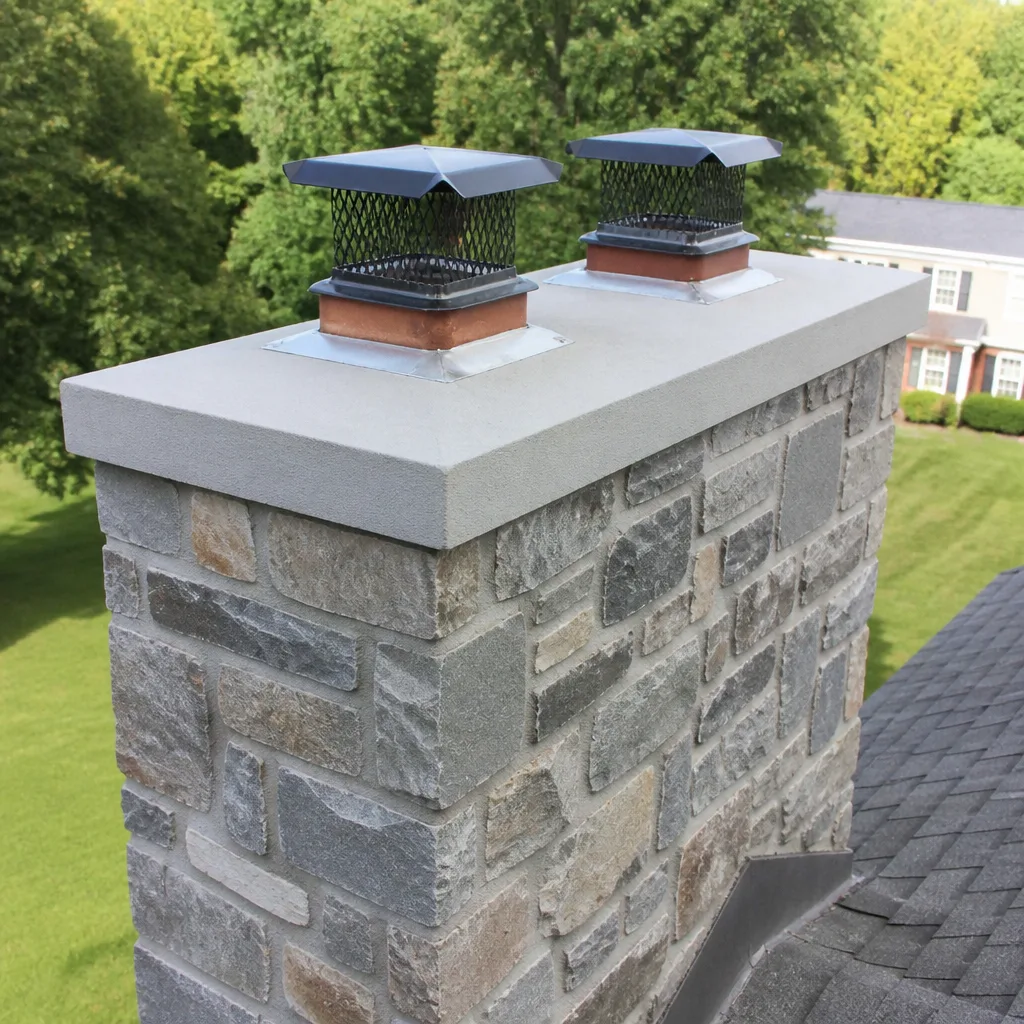 Caps & crowns
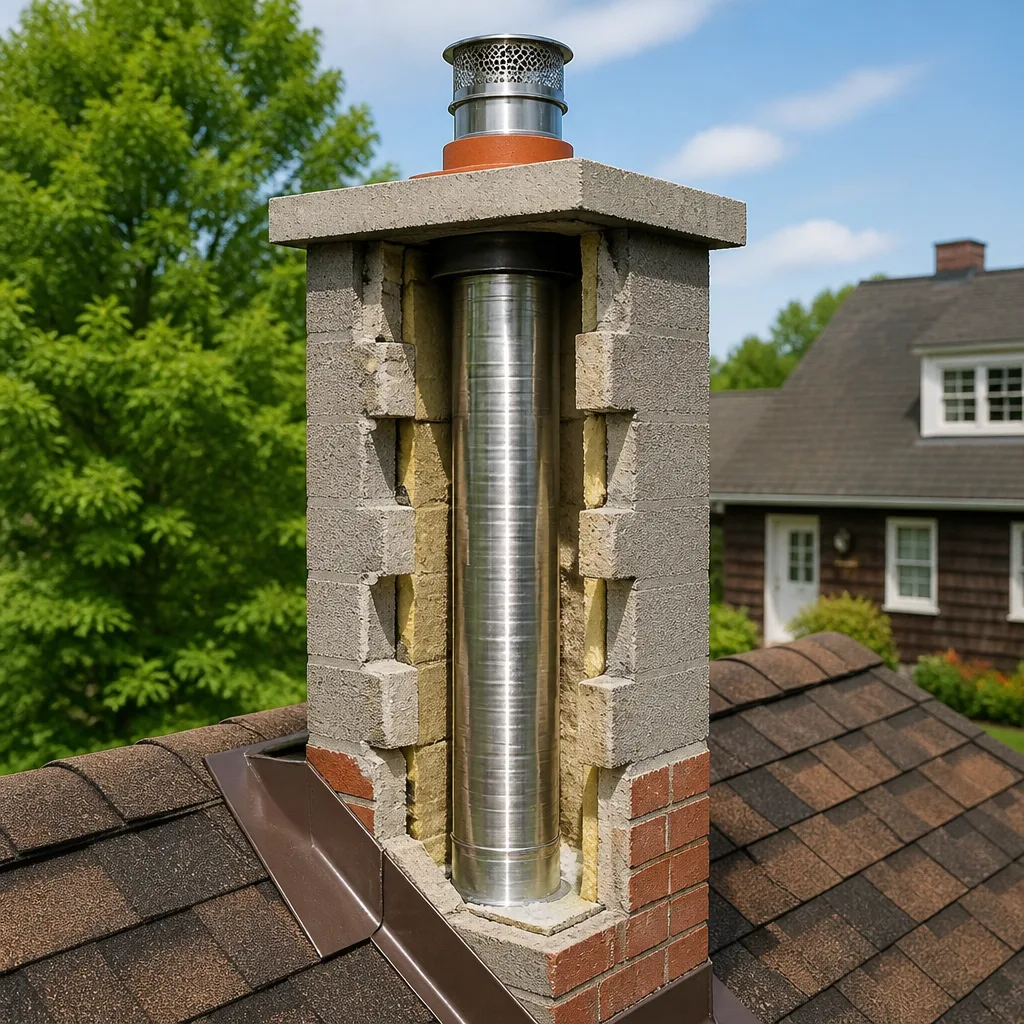 Flue relining
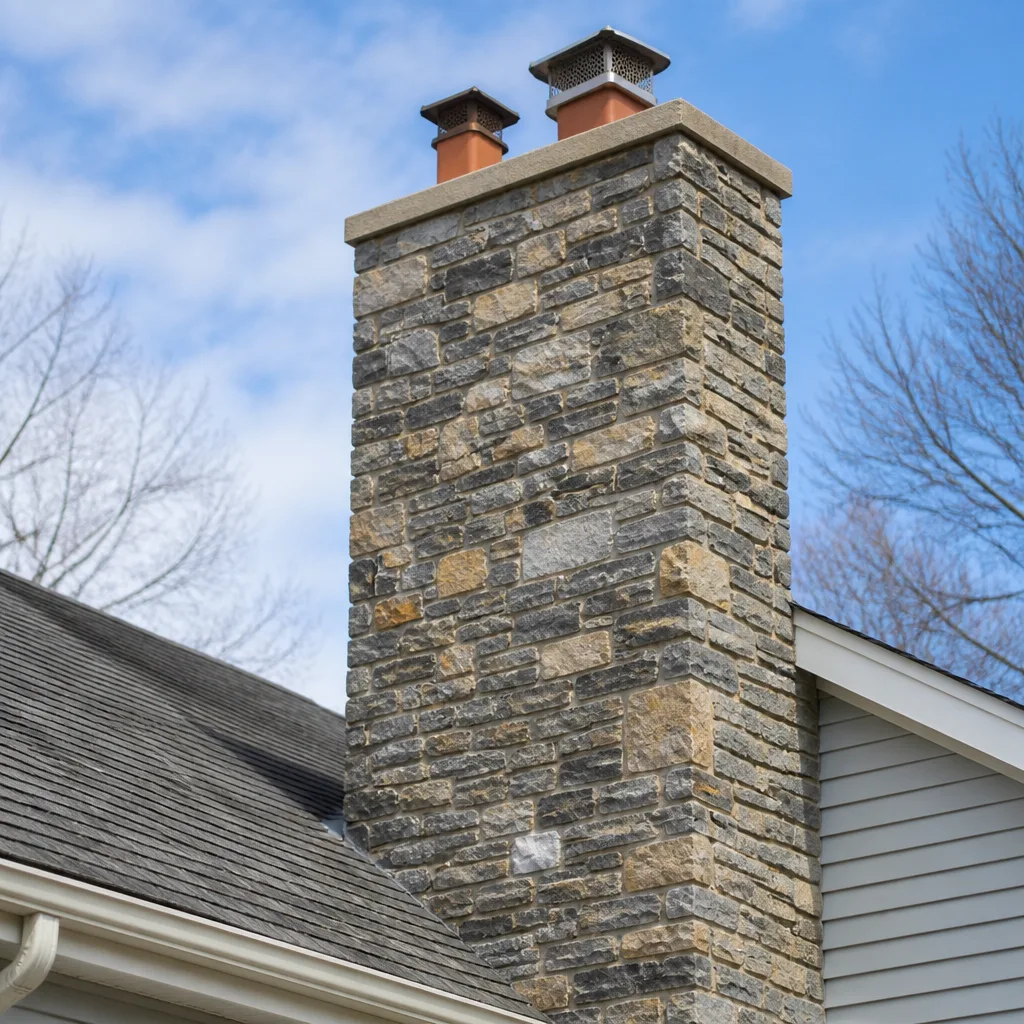 Masonry repair
 Gas fireplace service
Level 1 sweep and inspection to the NFPA 211 annual standard - flue, crown, cap, and flashing checked and photographed
Chimney sweep logs do not sweep chimneys. They loosen some creosote - which then falls where a brush and vacuum still have to collect it.
The Complete Guide to Chimney Cleaning in Raleigh
Most chimney fires in the U.S. are caused by chimneys that were “cleaned” – just not cleaned completely. That sounds like a contradiction, but it isn’t. A sweep who runs a brush up the flue and calls it done can leave creosote glazed onto the liner walls, soot packed behind the smoke shelf, and a firebox that looks tidy while the real problem sits a few feet above the damper. In Raleigh, where plenty of homes burn oak through the cooler months and sit on clay-heavy soil that shifts with the seasons, the difference between a surface sweep and a complete cleaning is the difference between a safe chimney and an expensive repair. This guide walks you through what a thorough job actually covers, how to spot the difference after the work is done, and how to read a quote without getting sold work you don’t need.
Quick Answer
A complete chimney cleaning in Raleigh covers the firebox, damper, smoke chamber, smoke shelf, flue, and cap – not just the flue. A surface-level sweep cleans the flue only and leaves the parts that catch the most creosote untouched. Ask any sweep to tell you what they cleaned and to show you before-and-after photos of the firebox and smoke chamber, because that’s where incomplete work hides.
Styles & brands we work with
- Sweep & inspection
- Caps & crowns
- Flue relining
- Masonry repair
- Gas fireplace service
Table of Contents
- What a Full Chimney Cleaning Covers (and What a Surface Sweep Skips)
- How Raleigh’s Clay Soil Affects Your Chimney Over Time
- Why the Wood You Burn in North Carolina Changes Creosote Buildup
- The Three Inspection Levels and Which One You Actually Need
- How Often Should You Get Your Chimney Cleaned in Raleigh?
- Red Flags in a Chimney Cleaning Quote
- The Overlooked Second Fire Hazard: Dryer Vents
- Common Mistakes to Avoid
What a Full Chimney Cleaning Covers (and What a Surface Sweep Skips)
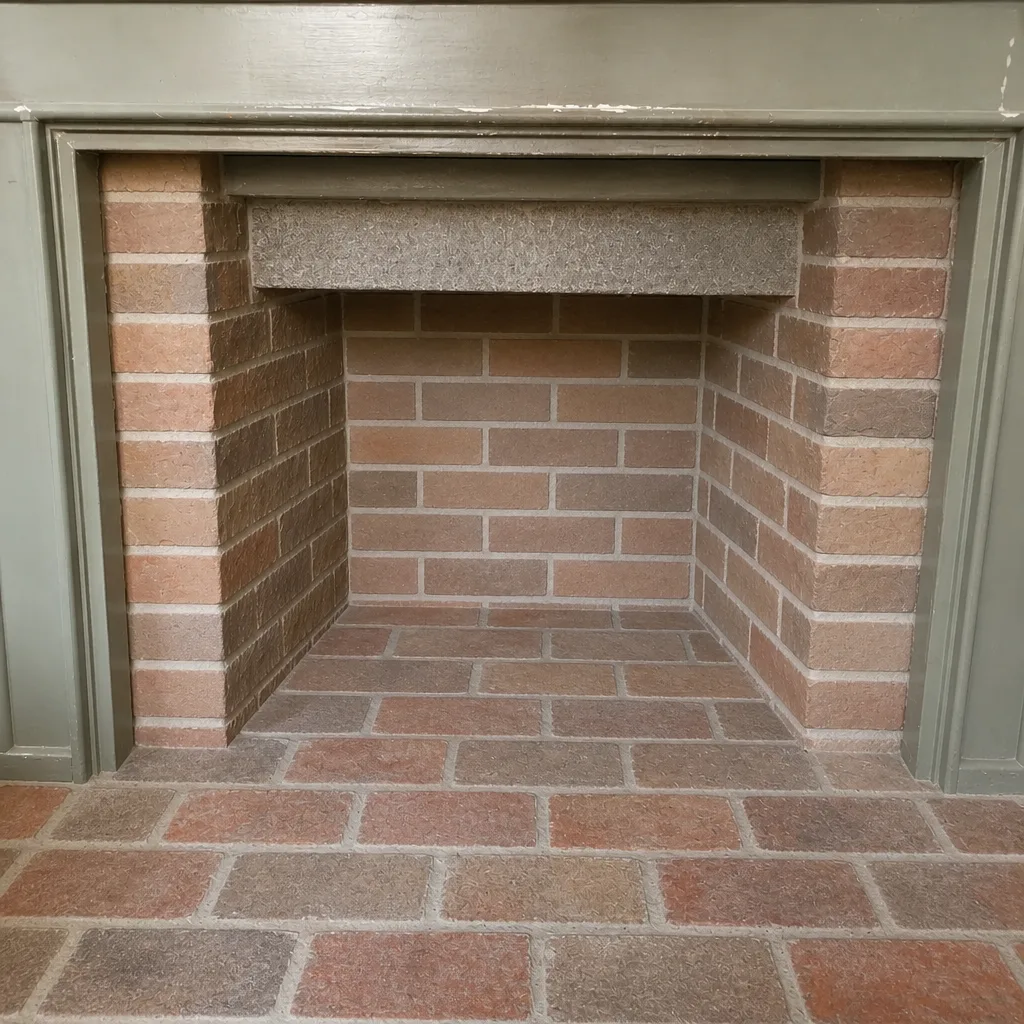
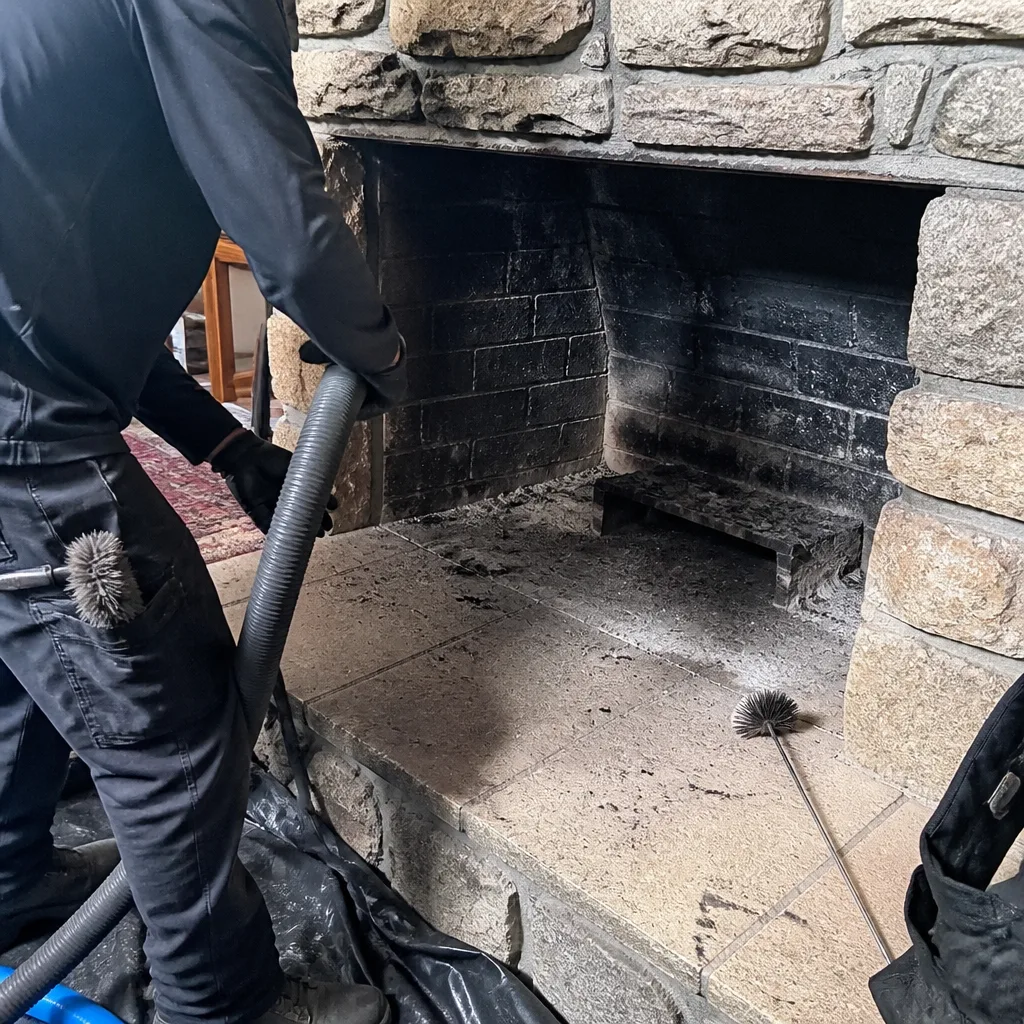
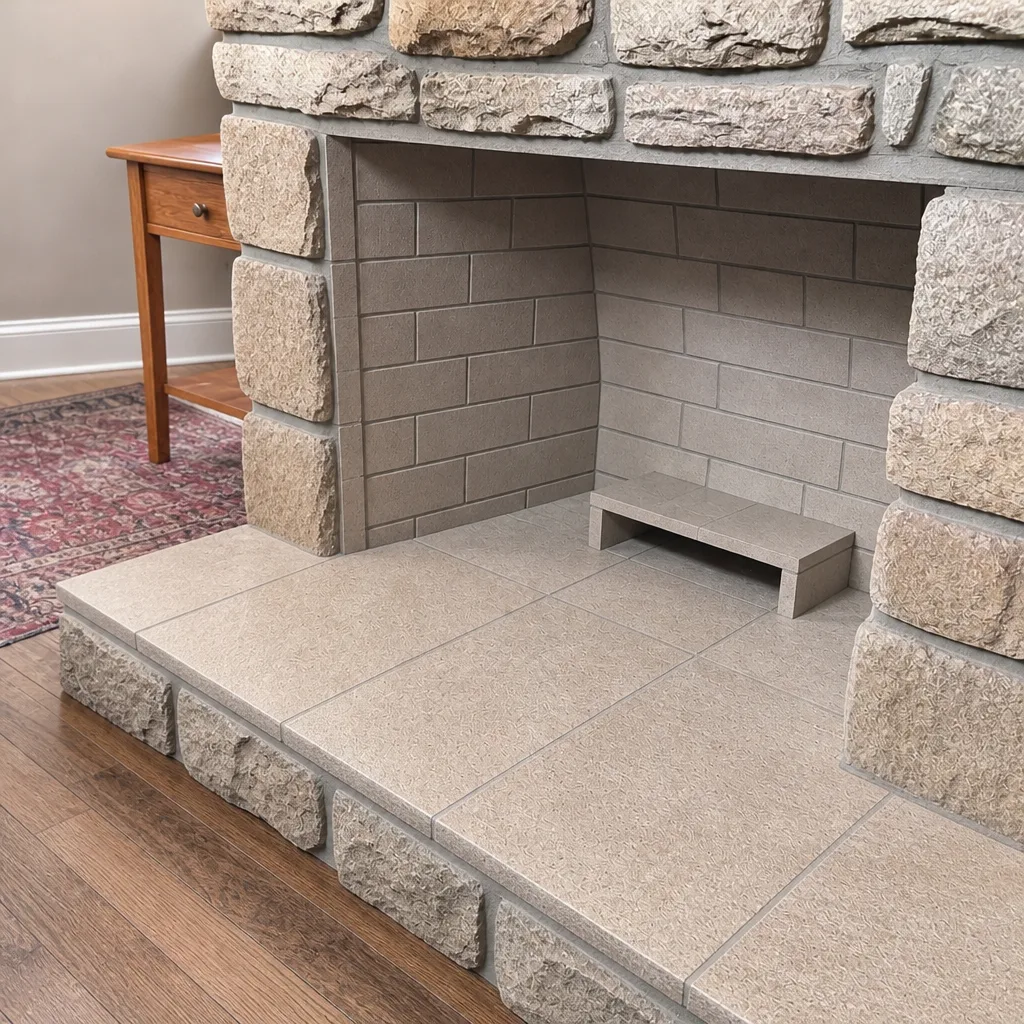
A complete cleaning touches six components. A surface sweep touches one. That gap is exactly where most of the trouble lives, and it’s why two quotes that differ by $100 can be describing two very different jobs.
Here’s what a full cleaning includes, from the bottom up:
- Firebox. Soot and ash removed, brick and mortar checked for cracks or spalling.
- Damper. Freed up and inspected for proper operation – a stuck damper is a carbon monoxide path.
- Smoke shelf. The ledge just behind the damper where falling creosote collects. A surface sweep often skips it entirely, and it’s the sneaky spot for a flue fire to start.
- Smoke chamber. The sloped area above the damper where turbulence slows smoke. It has to be brushed, not just swept past.
- Flue. Scrubbed from top to bottom with a properly sized brush so it actually contacts the walls of the liner.
- Cap and crown. Checked from the roof for nesting animals, cracked mortar, and debris.
After the job, ask three things. Did the crew run a camera or drop light down the flue and show you what it saw? Did they give you before-and-after photos of the firebox and smoke chamber? Did they tell you the condition of the liner in plain terms? If the answer to any of those is vague, the job may have stopped at the flue. A sweep who inspects, flags, and leaves without offering to fix what they find is a different business model than a full-service shop, and it’s worth knowing which one you hired. If you want a job that covers flue to firebox, our chimney sweep page lays out exactly what we include.
How Raleigh’s Clay Soil Affects Your Chimney Over Time
Raleigh sits on heavy red clay, and that clay moves. It swells when it’s wet and shrinks when it dries, and over a decade or two that cycle works on a home’s foundation. You may have already seen the symptoms inside: doors that catch in summer and swing free in winter, hairline cracks at the corners of rooms, or a masonry fireplace that has opened a step in the mortar.
Your chimney is part of the house’s foundation system. When the footing under the chimney shifts, the clay tile liner inside can crack. It’s not dramatic. Hairline cracks are common and often invisible from the firebox, which is why a camera inspection matters more here than in a lot of places. A cracked liner lets combustion gases and creosote heat escape into the surrounding masonry or framing, and it’s one of the most common reasons a chimney needs relining.
This is where material choice matters. A rigid stainless liner needs a straight, undisturbed run, and a chimney that has settled or was built with an offset will refuse one. DuraFlex flexible liner systems are built for exactly that – complex bends, offsets, and aging masonry where a rigid pipe won’t go. If the tile is cracked but the chimney structure is sound, HeatShield ceramic resurfacing can often restore the liner from the inside without a full rebuild, which is a middle-ground option a lot of single-service sweeps simply can’t offer. We repair what we find, using HeatShield rather than generic patching compounds.
Why the Wood You Burn in North Carolina Changes Creosote Buildup
What you burn determines how fast the flue fouls. That’s a fact of chemistry, not opinion, and it’s the one variable in chimney safety you control completely.
Most firewood in the Raleigh area is hardwood – oak, hickory, maple, and pecan are the usual suspects. Hardwoods burn hotter and longer, but they also put more energy into the chimney because they are dense. If the wood isn’t properly seasoned, that energy turns into smoke, and smoke is where creosote comes from. Softwoods like pine burn fast and hot, and while they get a bad reputation, the real culprit for creosote is moisture content, not species.
A quick way to think about it:
- Dry hardwood (seasoned 6-12 months): Hot, clean burn. Slower creosote accumulation.
- Wet hardwood: Smolders, smokes, and puts heavy, sticky creosote on the flue walls. This is the common case in Raleigh when wood was stacked and covered late.
- Softwood: Fine in a hot fire, but if it’s green it fouls fast. It’s a fire-starter, not the whole cord.
Cold-start fires and long, low smoldering burns make the problem worse. If your fireplace is mostly for ambiance on cool evenings, the flue stays cool, the smoke doesn’t draft cleanly, and creosote builds up faster than it would for someone who runs a hot fire every night. That’s a reason to inspect on schedule rather than waiting for a visible warning sign. Our Raleigh Chimney Cleaning services start with a look at what’s actually in the flue, because wood choice and burn habits tell us a lot about what to expect.
The Three Inspection Levels and Which One You Actually Need
The CSIA defines three inspection levels, and most homeowners walk in asking for the wrong one. Understanding the difference saves you money and gets you the right information.
- Level 1. A visual inspection of the readily accessible parts of the chimney and venting, done with basic tools like a flashlight and drop light. This is what’s included in a routine cleaning when nothing has changed. It’s the right call for a chimney that’s been serviced regularly and hasn’t had any problems.
- Level 2. Everything in Level 1 plus a camera inspection of the flue and accessible portions of the chimney, including the attic and crawlspace where the chimney passes through. Required when you buy or sell a home, after a chimney fire, after an earthquake, when you change fuel types, or when you’ve had a problem you can’t explain. This is the standard for most Raleigh home sales and for a chimney that’s never been scoped.
- Level 3. A Level 2 inspection plus removal of parts of the chimney or building when an accessible problem needs closer examination. Rare, and only when there’s a known reason to open something up.
Here’s how to decide. If you’ve had the chimney cleaned regularly and nothing’s changed, Level 1 is fine. If you just bought the house, if this is your first cleaning, or if you’ve seen smoke backing into the room, Level 2 is what you want. In our experience, a Level 2 camera inspection should come with a photo report you can look at yourself. That’s the point – you shouldn’t have to take anyone’s word for what’s in the flue. If a sweep can’t or won’t show you the images, ask why.
How Often Should You Get Your Chimney Cleaned in Raleigh?
The rule of thumb from the CSIA is once a year, and there are two reasons that number holds up. First, creosote accumulates every time you burn, even if the fire is small. Second, annual cleaning is really an annual inspection with a cleaning attached – it’s how small problems get caught before they become liner replacements.
For most Raleigh households, an annual clean-and-inspect in the early fall gets the chimney ready for the cooler months. A few situations call for more frequent attention:
- You burn wood regularly, especially oak or other hardwoods, and go through a cord or more per season.
- Your wood isn’t fully seasoned or your fireplace smolders more than it roars.
- You’ve had a chimney fire – even a small one – or noticed a puff of smoke back into the room.
- The chimney hasn’t been inspected since you moved in, and you don’t know its history.
- You’ve had significant foundation work or noticed mortar cracks around the firebox, given the clay soil.
Don’t skip a year because the fireplace “wasn’t used much.” A quarter cord still leaves a film on the walls, and a small fire still needs a clean flue. The inspection is where the real value is; the cleaning just makes the inspection possible. If you’re a Raleigh homeowner with an older home, that yearly check is the single best protection you have.
Red Flags in a Chimney Cleaning Quote
A chimney quote tells you most of what you need to know about the contractor before they set foot in your house. The industry has a split between full-service shops and sweep-only operators, and the quote is where that shows.
Watch for these:
- A price that’s suspiciously low. A complete cleaning takes time and the right equipment. A quote that undercuts everyone else often describes the flue-only version.
- No mention of the smoke chamber or smoke shelf. If the quote only lists the flue, the firebox and smoke chamber aren’t in scope.
- No inspection or camera mentioned. Every professional job includes a look at the liner condition. A quote without that is a quote that skips the important part.
- Instant diagnosis before inspection. If the person on the phone says you need a liner before anyone has seen the chimney, ask how they know.
- Generic materials. Ask what they use. Brands like HeatShield, DuraFlex, Famco, and Copperfield are what trade-trained installers stock. A shop that can’t name its materials may be using whatever’s cheapest that week.
- No written estimate. The price should be laid out in writing at the time of booking, with the scope spelled out.
When you’re comparing, put the quotes side by side and check the scope, not the total. A full cleaning that includes camera inspection and a written report is a better deal at a higher price than a flue-only sweep that leaves you guessing about the liner.
The Overlooked Second Fire Hazard: Dryer Vents
Chimney safety gets all the attention, but the dryer vent is the other hidden fire hazard in the same home, and it’s usually neglected longer. Lint accumulates on the inside of the duct, and lint is highly flammable. If the vent run is long, has bends, or exits on a wall that’s shared with a porch, the lint has nowhere to go.
Signs the vent is overdue:
- Clothes take noticeably longer to dry.
- The dryer gets hot to the touch during a cycle.
- There’s a musty smell or visible lint behind the dryer.
- It’s been more than a year since the last cleaning.
We offer dryer vent cleaning as a standalone or as an add-on when we’re already out for the chimney. It’s the same crew, the same visit, and both hazards handled together. For a homeowner with a busy schedule, that’s one appointment instead of two contractors to coordinate. If you’re a property manager, it’s a single accountable vendor for both the fireplace system and the laundry vent. Two hidden fire hazards, one call.
Common Mistakes to Avoid
- Assuming a sweep cleaned the whole chimney. Many report only the flue. Ask directly what was cleaned and get before-and-after photos of the firebox and smoke chamber.
- Burning unseasoned wood. Wet hardwood is the biggest cause of heavy creosote in Raleigh, and it’s completely in your control. Season wood for a full season, under cover, and split it to the right size.
- Skipping the inspection because the fire still draws well. A cracked liner can draft fine while combustion gases leak into the masonry. You can’t see it from the firebox.
- Hiring a sweep-only operation for a repair job. A sweep who flags a problem and hands you a list of contractors to call is a referral chain. Look for a contractor who can assess and fix what they find.
- Ignoring the dryer vent. It’s the second hidden fire hazard in the house and usually the more neglected one.
- Treating the low quote as the baseline. A low quote that describes half the work isn’t cheaper – it’s a different job.
- Waiting for smoke in the room. Smoke backing into the house is a symptom that something is already wrong. Don’t use it as your trigger to call.
See the difference
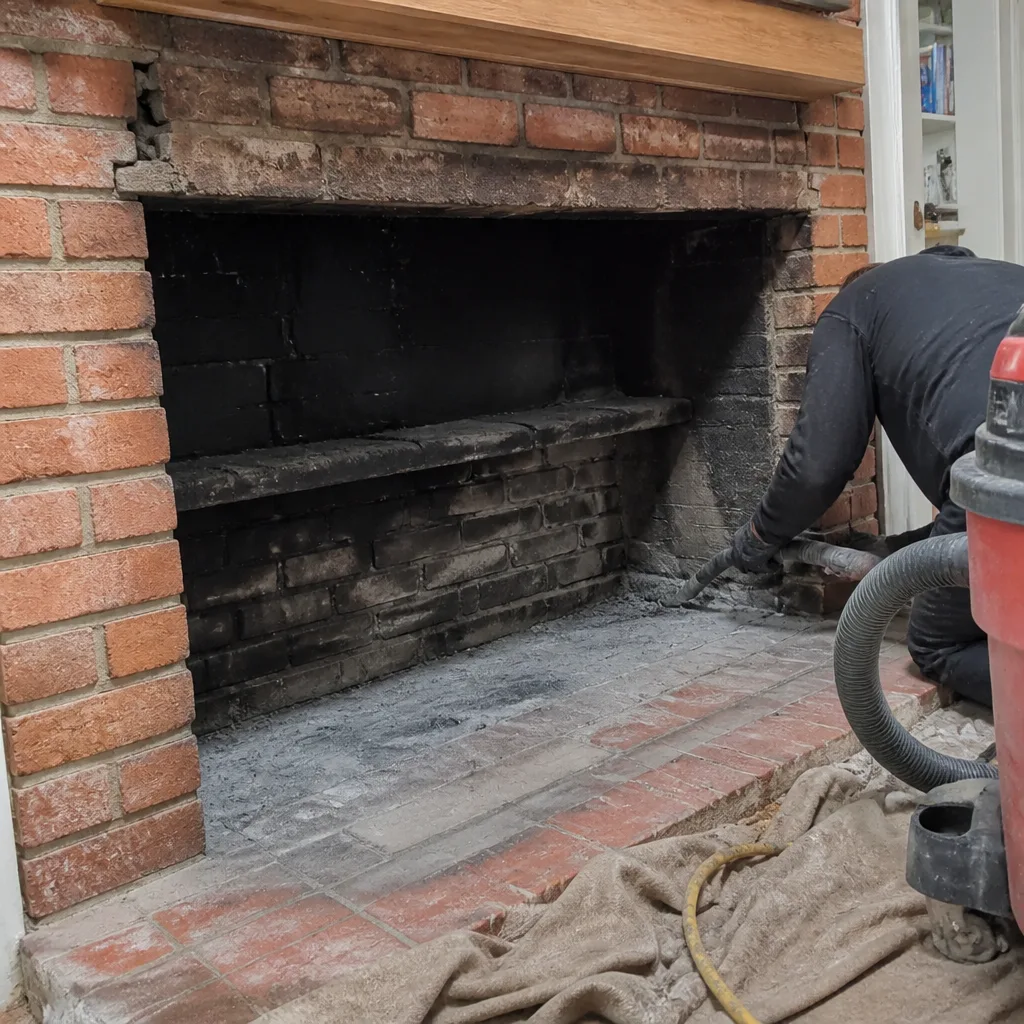 Before
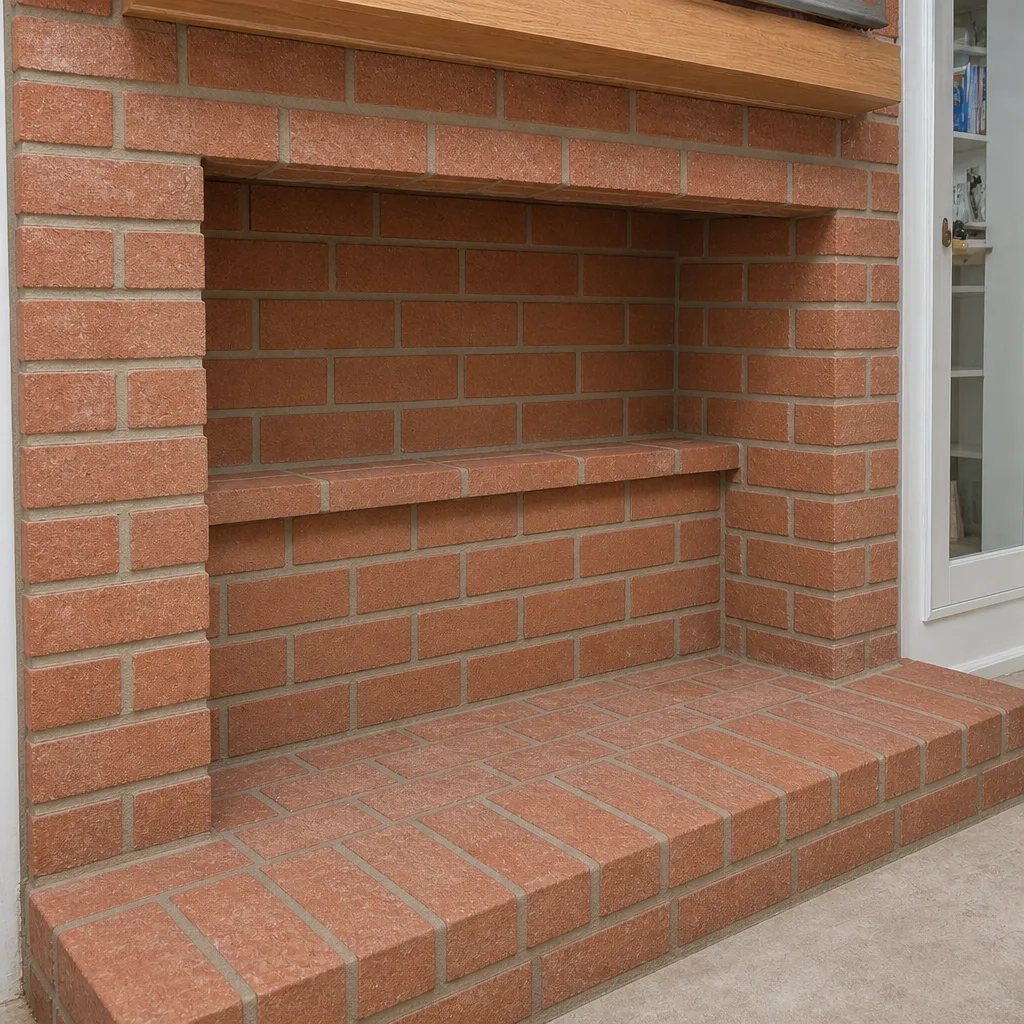 After
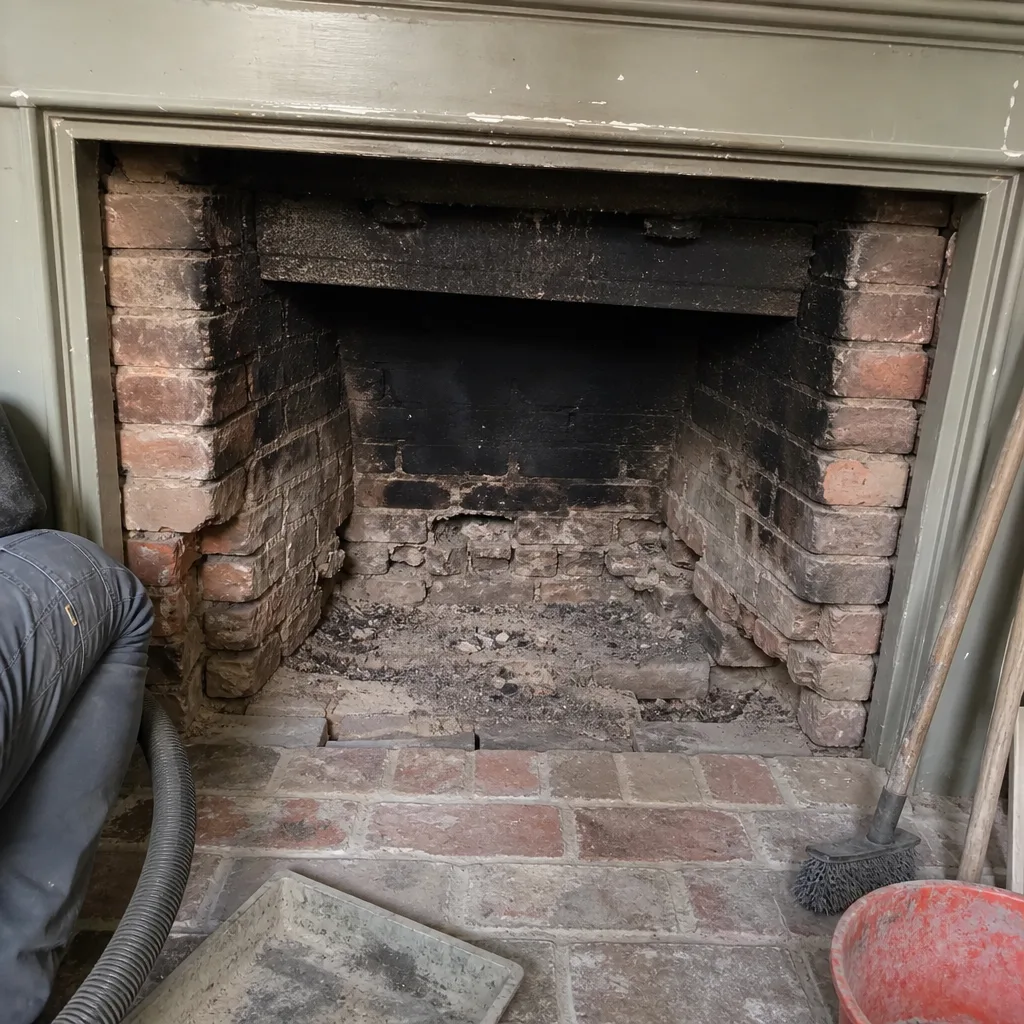 Before
 After
 Before
 After
When to Call a Professional
Some jobs aren’t DIY, and chimney cleaning – done completely – is one of them. The working parts of a chimney are hard to reach, the safety equipment takes training to use, and a complete cleaning needs a properly sized brush, a camera, and the knowledge to read what the camera shows. Call a professional when any of the following apply: you’ve had a chimney fire, even a small one; smoke backs into the room during a burn; you’ve just bought a home and the chimney is uncharted; there’s visible damage to the brick, mortar, or crown; the fireplace is a masonry unit on an older home; or the dryer vent hasn’t been cleaned in over a year. Those are all situations where the fix, if one is needed, is something a full-service contractor can handle without sending you to someone else.
Raleigh Chimney Cleaning offers free estimates in Raleigh. Call (833) 304-2125 for a written estimate and a scope you can hold in your hand.
Frequently Asked Questions
Most chimney cleanings in Raleigh land somewhere between $150 and $300 for a standard job, and the price should be set by a written estimate before any work begins. The range runs higher when the chimney is heavily fouled or hasn’t been cleaned in a while, and higher again if the cleaning and inspection turn up a repair. The estimate is free, and the written estimate is what sets the final price – no surprises after the work is done. Call (833) 304-2125 to get a written estimate for your chimney.
Once a year for most households, timed to the cooler months so the chimney is ready before the first fire. If you burn regularly, burn unseasoned wood, or have never had the chimney scoped, book a bit sooner. The yearly visit is really an inspection with a cleaning attached, and it’s how small problems get caught before they turn into a liner replacement. Call (833) 304-2125 to book your yearly check.
In practice, “sweep” is the trade and “cleaning” is the job – but they describe different scopes. A surface sweep covers the flue. A full cleaning covers the firebox, damper, smoke shelf, smoke chamber, flue, and cap, plus a look at the liner condition. Ask which one you’re getting before you book. Call (833) 304-2125 if you want a full cleaning scoped in writing.
Often it can be repaired. A cracked clay tile doesn’t automatically mean a full reline – HeatShield ceramic resurfacing can restore many damaged liners without rebuilding the chimney, and it’s a durable option we stock because it solves a real problem. A camera inspection is the only way to know which path is right. Call (833) 304-2125 for a camera inspection and a straight answer about the liner.
Creosote keeps accumulating, and the thicker it gets, the higher the fire risk. A flue fire is the worst outcome, and cracked liners or blocked flues can let combustion gases into the house. Skipping a year also loses the inspection, which is how small problems stay small. Call (833) 304-2125 to get back on schedule – estimates are free.
Yes, and it’s the practical way to do both. The dryer vent is the second hidden fire hazard in the home and often gets neglected longer than the chimney. Handling both in one visit means one appointment and one vendor for both systems. Call (833) 304-2125 to add dryer vent cleaning to your chimney appointment.
The Bottom Line
A chimney cleaning in Raleigh is a system check, not a flue-only sweep. A complete job covers the firebox, damper, smoke shelf, smoke chamber, flue, and cap, and it ends with a camera inspection and a report you can read yourself. The local variables matter: clay soil shifts foundations and can crack liners, and hardwood burned wet puts creosote on the walls faster than most people expect. The right way to protect your home is a yearly full cleaning with an inspection attached, done by a contractor who can both diagnose and repair what they find. We answer 24/7. Call (833) 304-2125 for a free estimate.
Written by the team at Raleigh Chimney Cleaning, serving Raleigh since 2013.