
Last updated November 14, 2026
 Sweep & inspection
 Caps & crowns
 Flue relining
 Masonry repair
 Gas fireplace service
Level 1 sweep and inspection to the NFPA 211 annual standard - flue, crown, cap, and flashing checked and photographed
Chimney sweep logs do not sweep chimneys. They loosen some creosote - which then falls where a brush and vacuum still have to collect it.
DIY vs Professional Chimney Cleaning: The Raleigh Homeowner’s Decision Guide
You can sweep a chimney yourself. That’s not the controversial part. The part most guides skip is this: sweeping and inspection are two different jobs, and only one of them is safe to do on your own. Creosote removal is satisfying, visible work. Finding what’s hiding behind the creosote is where the real stakes live – cracked flue tiles, gaps in the mortar, a liner that’s quietly failing. In this guide, we’ll walk through what a Raleigh homeowner can legitimately handle, where consumer tools fall short, what self-certifying your chimney means for your insurance, and an honest look at what the DIY route really costs once you count time and risk.
Quick Answer
You can safely handle firebox cleaning, ash removal, and basic exterior checks between visits. You cannot safely or effectively inspect a flue without professional camera equipment, and that’s the part that catches problems before they become fires. For most Raleigh homeowners with a working fireplace or wood stove, annual professional service is worth the cost because it pairs the sweep with a camera inspection – the sweep alone is just half the job.
Styles & brands we work with
- Sweep & inspection
- Caps & crowns
- Flue relining
- Masonry repair
- Gas fireplace service
Table of Contents
- The Two Jobs of Chimney Care – And Why Only One Is DIY-Safe
- What You Can Actually Do Between Professional Visits
- Consumer Brushes vs Professional Equipment – Where the Gap Shows
- Why Camera Inspection Is the Non-Negotiable Part
- Insurance and Liability When You Self-Certify
- An Honest Cost Comparison: DIY vs Annual Service
- Raleigh-Specific Factors That Shape the Decision
- What Happens When a Sweep Finds a Problem
The Two Jobs of Chimney Care – And Why Only One Is DIY-Safe
Chimney work has two halves that look like one job. The first is cleaning – getting soot and creosote off the flue walls so your smoke path stays clear. The second is inspection – finding structural problems, blockages, and deterioration inside a flue you can’t see without a camera. Homeowners can learn the first. The second requires equipment and experience most people don’t have.
Here’s why that split matters. A chimney can look perfectly clean from the firebox and still have a hairline crack three feet up the flue tile that lets carbon monoxide into the living space. Sweeping doesn’t reveal that. Cleaning the flue walls actually makes cracks harder to see because the soot was filling them. A camera inspection is what turns a swept chimney into a known-safe chimney.
In Raleigh, this plays out in a particular way. Our climate swings between humid summers and cool, damp winters, and chimneys here see long stretches of disuse followed by heavy burning when temperatures drop. That cycle of moisture exposure and heavy use is hard on masonry and liners. The flues that fail often look fine on the surface. The problems show up on camera.
So the honest framing isn’t “DIY is unsafe.” It’s that the DIY half stops at the point where the value begins. If your goal is a clean-looking firebox, a homeowner can get there with a brush and an afternoon. If your goal is knowing whether the chimney is safe to burn in, that’s a different job.
What You Can Actually Do Between Professional Visits
Between annual or biennial professional sweeps, there’s real work a homeowner can do. None of it replaces the inspection, but all of it extends the interval between heavier cleans and helps you spot changes early.
Here’s what we’d consider safe and reasonable:
- Firebox cleaning. Scoop out ash once it builds up more than an inch or so. A metal ash bucket with a tight lid, kept away from anything combustible, is the only container we’d recommend. Ash can stay hot for days.
- Ash removal from the ash pit. If your fireplace has an ash dump, empty it before it fills to the door level. Blocked ash pits restrict airflow and affect draft.
- Exterior checks from the ground. Walk the yard and look at the chimney from a distance: is the cap intact, is there visible spalling on the brick, does the crown look cracked, are there plants or vines growing against the masonry. Note anything that’s changed.
- Damper operation. Open and close the damper a few times before each burn season. It should move freely. A damper that sticks or won’t close fully is worth flagging.
- Creosote observation. Shine a flashlight up the flue from the firebox. If you see shiny, glazed, tar-like buildup on the walls, that’s stage three creosote and it needs professional removal – glazed creosote ignites at lower temperatures than the fluffy kind.
- Burn-season prep. Make sure your wood is seasoned. Green or wet wood produces more creosote, and in Raleigh’s humid climate, wood stored uncovered will soak up moisture fast. Cover the top of the stack, leave the sides open to breathe.
What’s off the list: anything above the damper, any work on the roof, any attempt to inspect the flue. Those are the jobs where the DIY version creates more risk than it eliminates.
Consumer Brushes vs Professional Equipment – Where the Gap Shows
The consumer brush you’ll find at a hardware store is a functional tool for one specific case: a straight, short flue with light soot. That describes a small fraction of the chimneys we see. The gap between consumer and professional equipment shows up in three places – reach, coverage, and diagnosis.
Reach. Consumer brush kits come with a handful of flexible rods, usually topping out at 15 to 20 feet. A typical Raleigh masonry chimney on a one-and-a-half-story house runs closer to 25 to 30 feet from the firebox to the cap. If your brush can’t reach the top of the flue, you’re cleaning the lower third and assuming the rest is fine. It usually isn’t – creosote accumulates heaviest near the cooler top of the flue, which is exactly the part the consumer brush skips.
Coverage. Professional brushes are matched to flue shape and size. A brush that’s too small leaves a ring of creosote around the flue walls. A brush that’s too stiff on an older, softer clay tile can crack the tile. Matching the brush to the liner is a judgment call that comes from seeing a lot of flues. Consumer kits give you one size and hope.
Diagnosis. This is the widest gap. A brush, no matter how good, tells you nothing about the condition of the flue. A professional setup includes a chimney camera on a flexible rod, and that’s what turns a cleaning into an inspection. We run a camera on every job for exactly this reason – what we find on the screen determines what we recommend next, and the homeowner sees the same screen we do.
The liner repair side of the trade is where the difference gets even sharper. We stock and install materials from HeatShield, Gelco, Olympia Chimney, Famco, DuraFlex, and Copperfield – the same product lines professional chimney technicians across the country work with. Homeowners can’t buy most of that inventory, and even if they could, installing a liner isn’t a weekend project. It’s a job about matching the material to the flue.
Why Camera Inspection Is the Non-Negotiable Part
If there’s one sentence to take from this guide, it’s this: the camera is the reason professional service is worth the cost. Everything else – the drop cloths, the brush, the shop vac – is preparation. The camera is the deliverable.
Here’s what a camera inspection catches that nothing else does:
- Cracked or shattered flue tiles. Clay tile liners crack with age and thermal cycling. A crack lets combustion gases – including carbon monoxide – leak out of the flue and into the structure of the house. From the firebox, the flue looks fine.
- Gaps in the mortar joints between tiles. Older chimneys in Raleigh’s historic neighborhoods often have mortar joints that have eroded. The liner is only as tight as its joints.
- Offset flues and hidden transitions. Many chimneys jog around obstructions. The bend is where obstructions collect and where brushes tend to skip past creosote.
- Blockages. Nests, leaves, and collapsed debris can sit in a flue without any obvious smoke backup if the obstruction is high enough and the fire is small.
- Liner deterioration on older installs. If a chimney has been relined in the past, the liner can still fail. The camera shows its condition.
- Creosote stage. The camera lets us judge creosote by appearance – fluffy stage one, crusty stage two, glazed stage three – and recommend accordingly. Stage three creosote often needs a chemical treatment before it can be brushed, because brushing glazed creosote just spreads it.
None of those findings can be reliably made by flashlight from below. A homeowner cleaning their own flue, however carefully, is skipping the step that catches problems before they show up as smoke in the living room. That’s the part we won’t pretend a brush can do.
Insurance and Liability When You Self-Certify
Most homeowner insurance policies don’t require an annual chimney inspection in writing, but nearly all of them contain clauses that make a documented maintenance record valuable if a claim happens. The typical scenario: a chimney fire or a carbon monoxide incident occurs, the insurer investigates, and one of the first questions is when the chimney was last professionally serviced and by whom.
If the answer is “I cleaned it myself,” the claim isn’t automatically denied – policies vary, and we’re not your insurer or your attorney, so read your own policy. But the burden of proof shifts. You’d need to establish that the chimney was in good condition before the incident. Without a professional inspection record, that’s hard to do.
There’s a second layer that gets less attention. When you hire a professional chimney service, the professional carries the liability for the work performed. If the sweep misses something the camera should have caught, that’s on them. If a homeowner sweeps their own chimney and something goes wrong later, there’s no one to shift that liability to. The insurance company will look at the homeowner.
That doesn’t mean every homeowner needs professional service every year. It means the professional inspection is the piece that creates a documented, defensible record. In our experience working with Raleigh homeowners, the ones who end up needing to file a claim are usually the ones most grateful for a paper trail showing the chimney was inspected and serviced on a regular schedule.
An Honest Cost Comparison: DIY vs Annual Service
The DIY route looks cheaper on the surface. Once you count equipment, consumables, time, and the risk you’re self-insuring against, the math gets closer than most guides admit. Here’s the honest version.
What DIY actually requires:
- Chimney brush kit with rods: $40 to $120 depending on length and quality
- Shop vac with a fine particulate filter (a normal home vac won’t handle soot): $80 to $150
- Drop cloths, safety glasses, a respirator rated for soot: $40 to $80
- Trips up and down the ladder if you’re sweeping from the roof, or repeated rod extensions from the firebox: several hours of your time
- Replacement brushes as they wear: $20 to $40 per year
- Replacement flue tiles if the brush is too stiff and cracks an older liner: we won’t put a number on that here because it depends entirely on the flue – but it’s not a small line item
That puts the equipment outlay in the $200 to $400 range in year one, plus your own time, plus the risk you’re absorbing. And the cleaning still doesn’t include the inspection.
What professional service includes:
A professional sweep is a call-and-book job with a flat price agreed before we start. The written estimate sets the final number; there are no surprise add-ons after the fact. You get the sweep, the camera inspection, the photo record, and a written report on anything we find. If we spot a problem, you get an explanation with the camera footage in front of you – not a recommendation you have to take on faith.
Compare the two honestly. DIY saves the labor cost of one visit. It doesn’t save the inspection, and it doesn’t create any documentation. The equation flips decisively once you factor in what a missed defect costs to find later.
If you’re ready to see the difference for yourself, our chimney sweep page walks through what a visit looks like start to finish.
Raleigh-Specific Factors That Shape the Decision
Raleigh’s chimney stock isn’t a single thing. Chimneys built into older homes in neighborhoods like Oakwood and Boylan Heights are often masonry with clay tile liners that have seen decades of heating and cooling. Newer builds in neighborhoods like North Hills and Midtown are more likely to have factory-built fireplaces with metal liners that have their own inspection and maintenance timeline. A guide that treats those as the same chimney will steer half its readers the wrong way.
The climate plays a role. Raleigh’s humid summers keep masonry damp for long stretches, which is hard on mortar and on the exterior brick. Come fall, that moisture has often worked into small cracks that weren’t there before. The first cool snap is when we get the most calls from homeowners who’ve noticed a draft coming down the chimney. It’s almost always a cracked crown or a gap at the flashing, not something inside the flue itself.
There’s also the burn-season rhythm. In our experience, the heaviest creosote years are the ones where a homeowner burns a lot in November and December on wood that wasn’t quite ready. Wet wood produces more creosote, and heavy consecutive burns lay it down faster. If you burn often and hard in a Raleigh winter, an annual sweep is not optional. If you burn a handful of fires per season on well-seasoned wood, you may be able to stretch to a biennial service. A camera inspection is what tells you which category your chimney falls into.
For a broader picture of how service works in this market, our Raleigh page lays out the neighborhoods, service areas, and how we approach jobs in each part of town.
What Happens When a Sweep Finds a Problem
This is where the DIY decision gets interesting. Say you hire a sweep, they run the camera, and they find a cracked flue liner. What happens next depends entirely on who you hired. A sweep-only operator will flag the problem and hand you a referral, which means another call, another visit, another estimate from a company that hasn’t seen the chimney yet.
We handle the repair side in-house. Depending on what the camera shows, the options range from a full reline to a resurfacing that keeps the existing structure. HeatShield ceramic resurfacing is one tool we use often – it restores a damaged flue liner rather than replacing it, which is a middle-ground option a lot of homeowners don’t know exists. For chimneys that can’t accept a rigid liner because of bends or offsets, we install DuraFlex flexible stainless systems. The material follows the flue’s actual shape instead of forcing a straight pipe through a curved chimney.
The point isn’t that repair is always needed. It’s that you’ll know what you’re dealing with. Sometimes the camera shows a chimney that’s fine, and the right answer is “sweep it and see you next year.” We say that to Raleigh homeowners regularly. We just as regularly find a liner that needs attention before the next burn season. Either way, you’ll see what we see.
The dryer vent part of the picture fits here too. A blocked dryer vent is the other hidden fire hazard in most houses, and if we’re already out looking at the chimney, it’s a sensible hour of work to check the dryer duct at the same time. Our dryer vent cleaning service can run as a standalone call or alongside a chimney visit. One trip, two hazards addressed.
Common Mistakes to Avoid
- Judging the chimney by what you can see from the firebox. A clean-looking firebox tells you almost nothing about flue condition. The camera is the only way to see what’s actually there.
- Sweeping in humid weather. Raleigh summers keep masonry and flue liners damp for weeks at a stretch. Soot loosened in humid conditions tends to clump instead of dropping clean. Sweeping after a dry stretch gets better results.
- Using a brush sized for a different flue. A brush that’s too stiff on older clay tile can crack it. Match the brush to the liner type, not to whatever the hardware store had on the shelf.
- Burning wet wood because it’s what’s on hand. Seasoned wood makes a bigger difference in creosote accumulation than most homeowners realize. Wet wood burns cool, which drives more creosote onto the flue walls.
- Skipping the inspection because the sweep went fine. A sweep that runs without incident doesn’t confirm the flue is intact. It confirms there wasn’t a blockage. Those are different questions.
- Treating an inspection photo as an upsell attempt. If a technician shows you a photograph of a cracked tile, that’s evidence, not a sales tactic. Ask questions, look at the screen, and get the estimate in writing.
- Assuming a factory-built fireplace needs less attention. Factory-built units have their own inspection intervals and their own failure modes. The absence of masonry doesn’t mean the absence of risk.
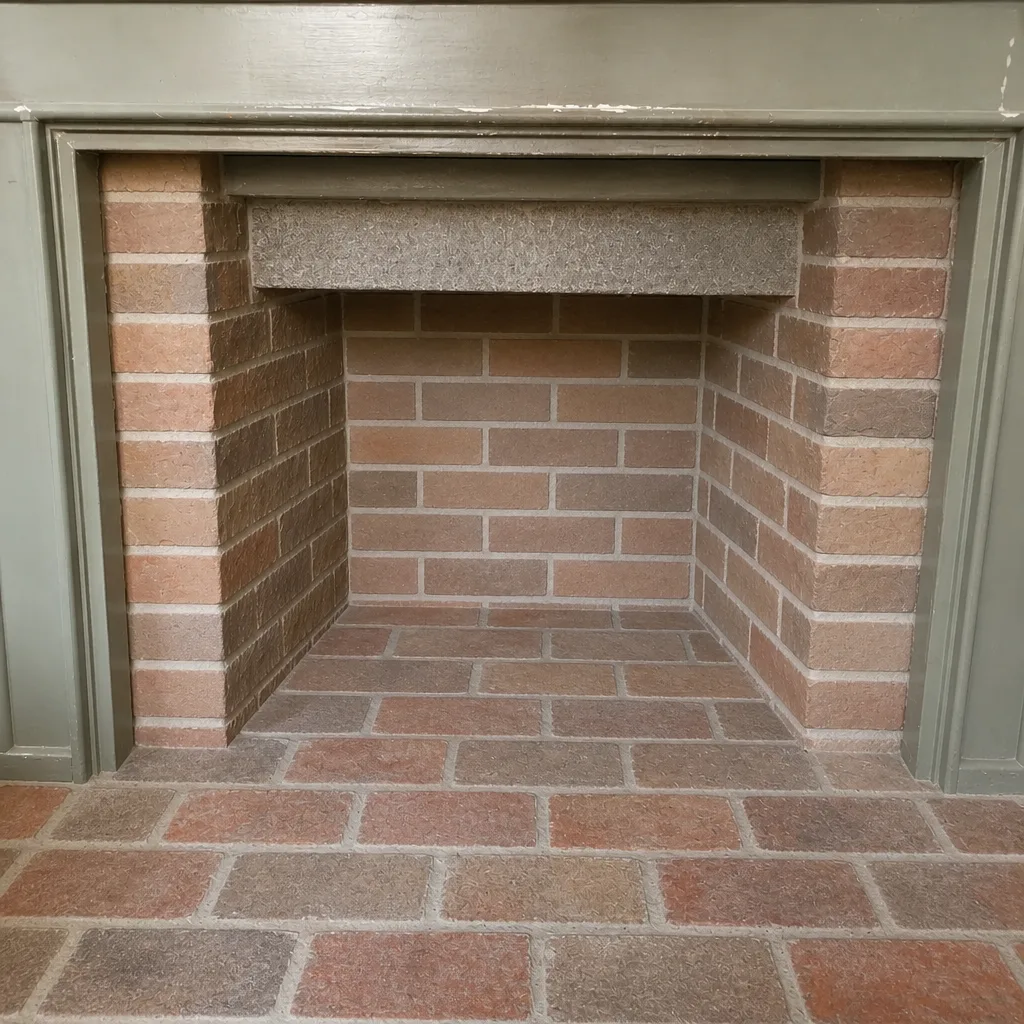
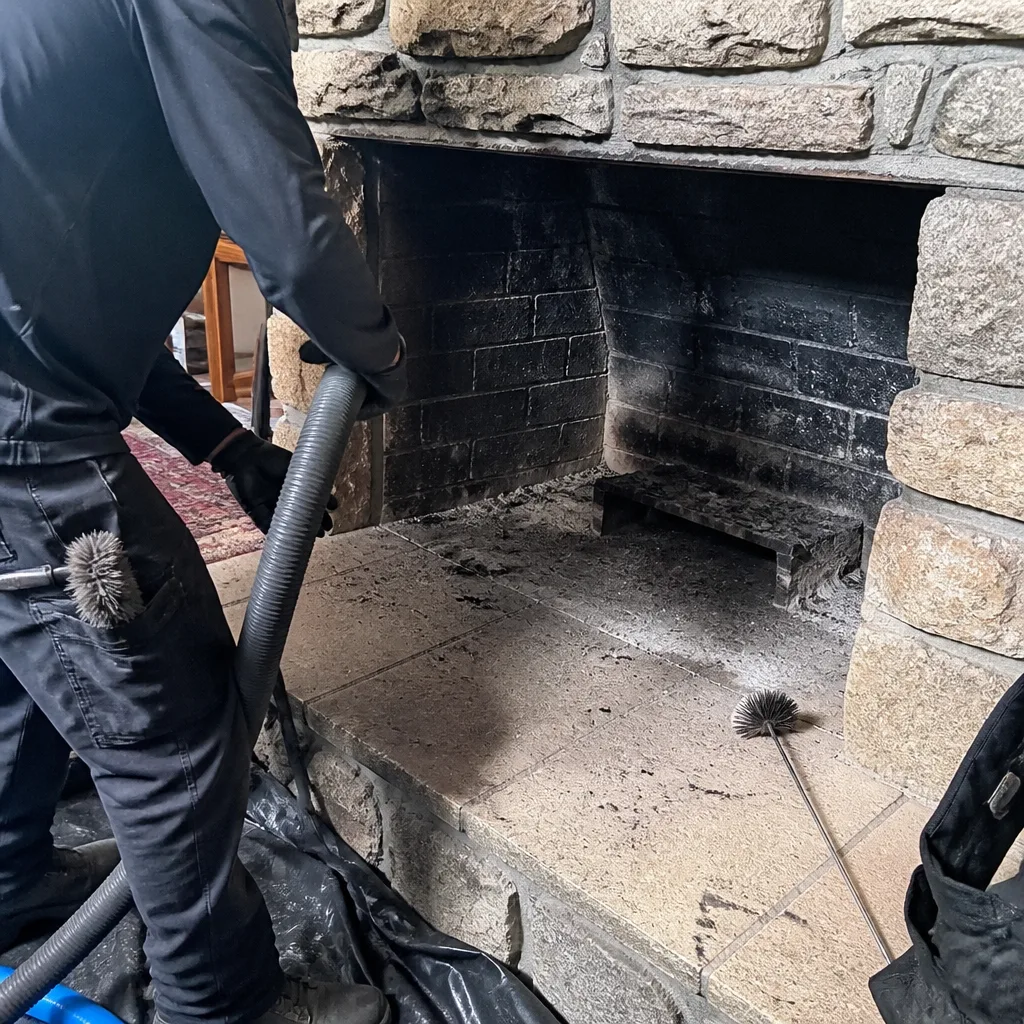
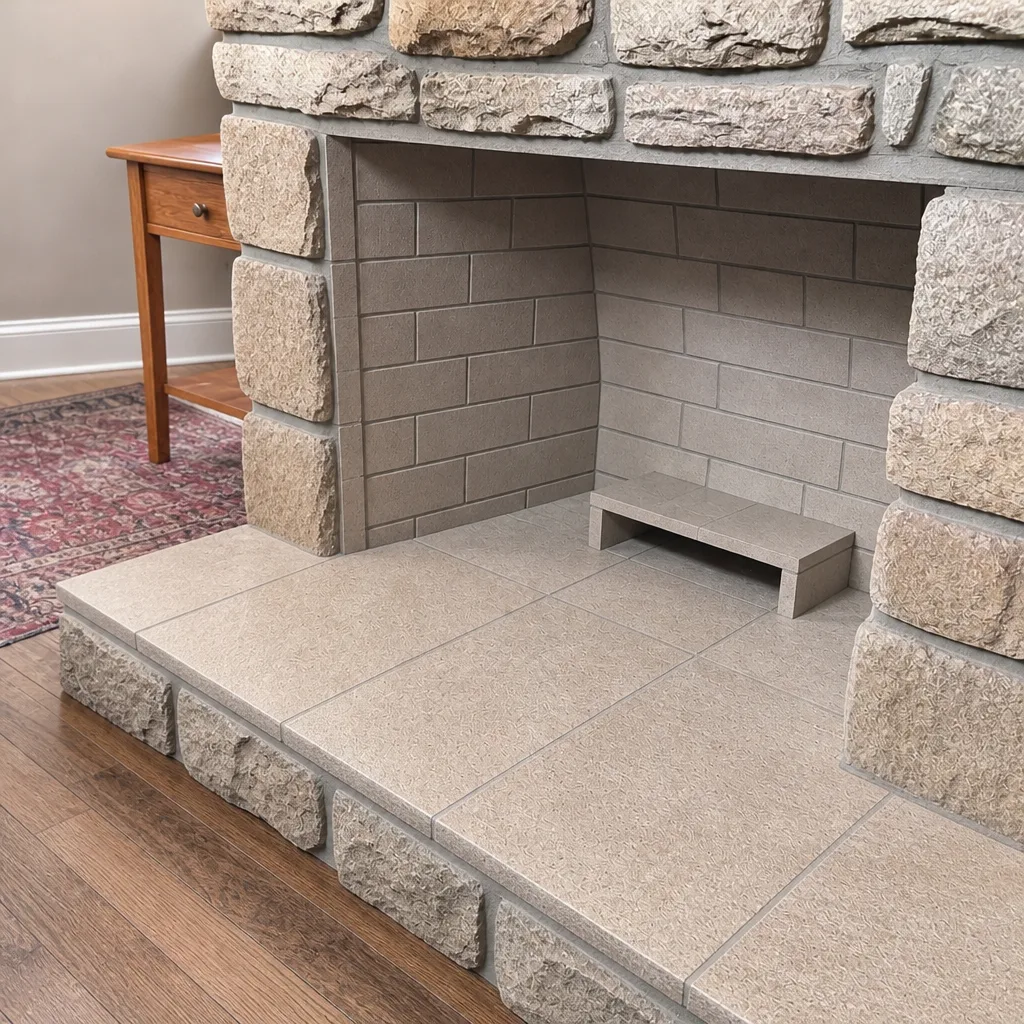
See the difference
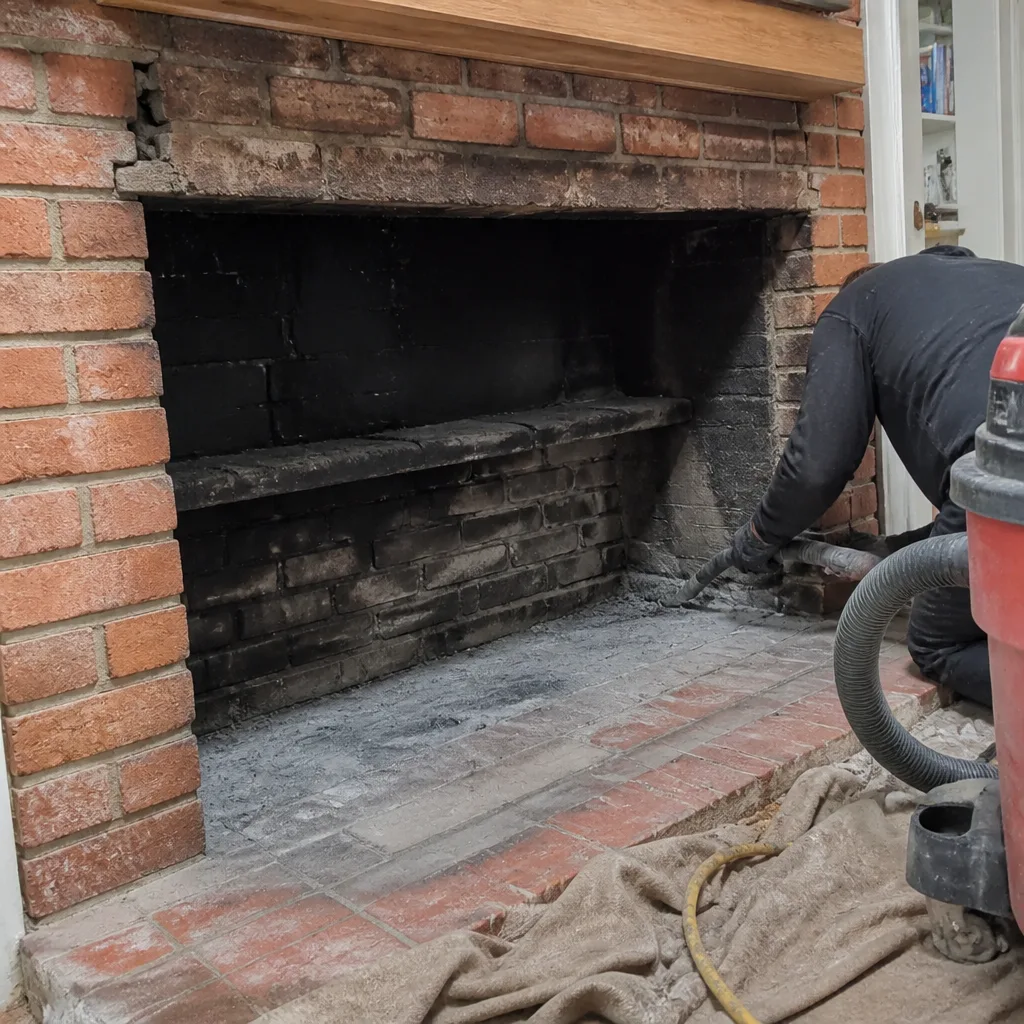 Before
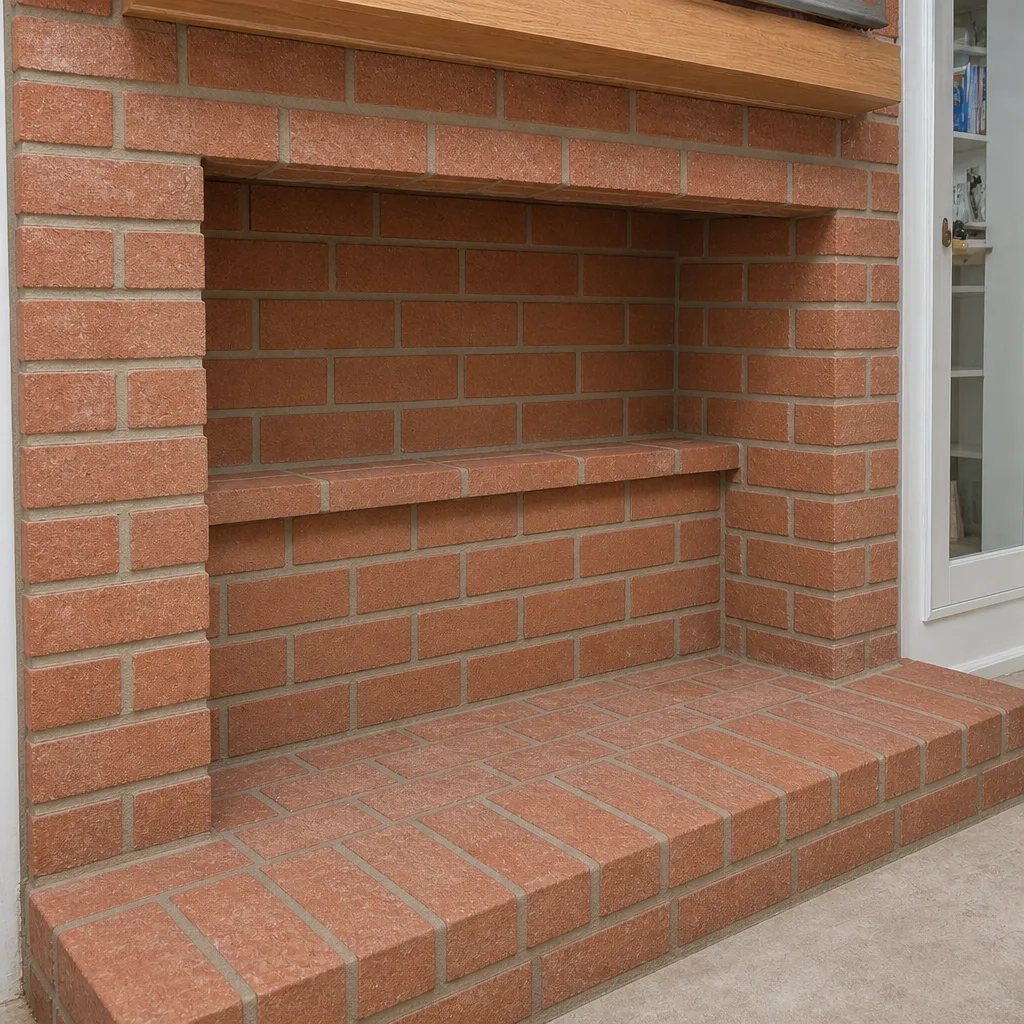 After
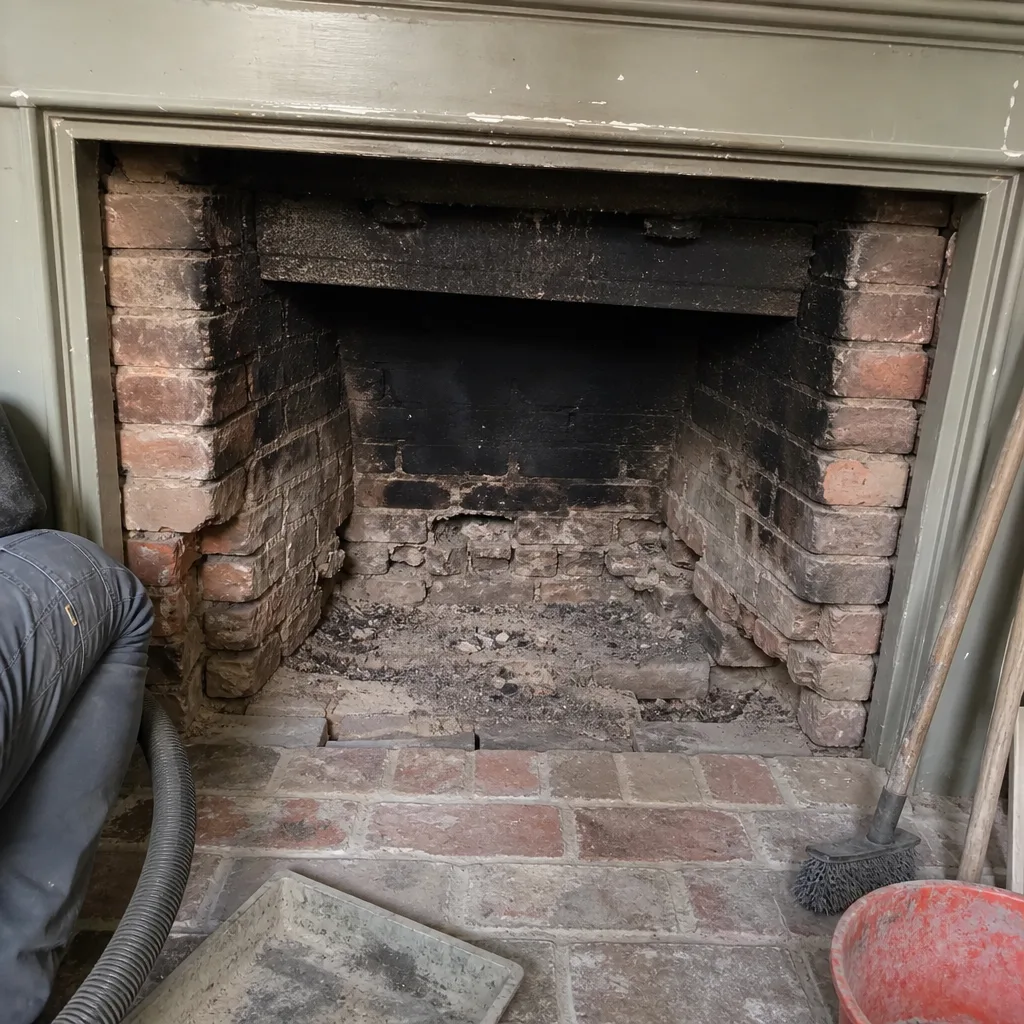 Before
 After
 Before
 After
When to Call a Professional
Some situations clearly warrant a call rather than an afternoon with a brush. If you see glazed, shiny creosote in the flue, that’s stage three and needs a chemical treatment before it can be swept. If you’ve had a chimney fire – even a small one you put out yourself – the flue needs a camera inspection before you burn again, because the fire can damage the liner in ways you can’t see from below. If you’ve just moved into a home in Raleigh and you don’t know the last time the chimney was serviced, get it inspected before the first burn. If your smoke draft is poor or you smell smoke in the house on cold mornings, something is obstructing the flue. And if you’re facing a repair estimate from a sweep-only operator, it’s worth getting a second look from someone who handles the repair themselves.
Raleigh Chimney Cleaning offers free estimates in Raleigh – call (833) 304-2125 to schedule. We answer 24/7. Fast dispatch from 7am to 7pm, Sunday through Friday.
Frequently Asked Questions
You can safely remove ash from the firebox and clean the firebox floor, and you can do basic exterior checks from the ground. You cannot safely inspect the flue without camera equipment, and the flue is where the real hazards live. If your goal is a clean firebox between professional visits, DIY is fine; if your goal is knowing the chimney is safe to burn in, call (833) 304-2125.
Once per year is the standard recommendation for a chimney in regular use, and more often if you burn heavily or burn wood that isn’t fully seasoned. If you burn only a handful of fires per season, a biennial sweep with an annual inspection can work. The camera tells you which interval fits your chimney – call us for an exact recommendation and estimate.
A standard sweep with a camera inspection is quoted per job, and the written estimate sets the final price before we start. Call (833) 304-2125 for a free estimate – no service-call fee, no charge to come look.
Not always. A small crack or a deteriorated section can sometimes be restored with HeatShield ceramic resurfacing rather than replaced. Larger failures, or flues with multiple damaged tiles, usually call for a full reline. The camera footage determines which one you’re dealing with, and we walk you through what we see before recommending anything.
Coverage depends on your specific policy, and we’re not your insurer. What we can say is that insurance investigations routinely ask for maintenance records, and a professional inspection report makes the claim process much cleaner. Without one, the burden of proof falls on you. Read your policy and talk to your agent – but consider the record-keeping value of an annual professional inspection before you skip it.
Creosote builds up with every fire, and at stage three it becomes glazed and ignites at lower temperatures than wood does. A chimney fire can damage the liner, and a damaged liner lets combustion gases into your home. You might not notice a problem for several seasons; the flue doesn’t send warnings until it’s already failed. A sweep and inspection catch the buildup before it reaches that point – call (833) 304-2125 to book one.
The Bottom Line
DIY chimney care covers the firebox, ash, and basic exterior observation. That’s real work and it’s worth doing. What DIY can’t do is inspect the flue, and that’s the part of the job that prevents fires. The honest cost comparison favors professional annual service once you count equipment, time, and the fact that the DIY route skips the inspection entirely. If you’re in Raleigh and you want a clear picture of your chimney’s condition, the camera is the place to start. Call Raleigh Chimney Cleaning at (833) 304-2125 for a free estimate. We’re glad to show you what we find so you can decide for yourself. Learn more on our Raleigh chimney cleaning page.
Written by the team at Raleigh Chimney Cleaning, serving Raleigh since 2013.