
Last updated November 14, 2026
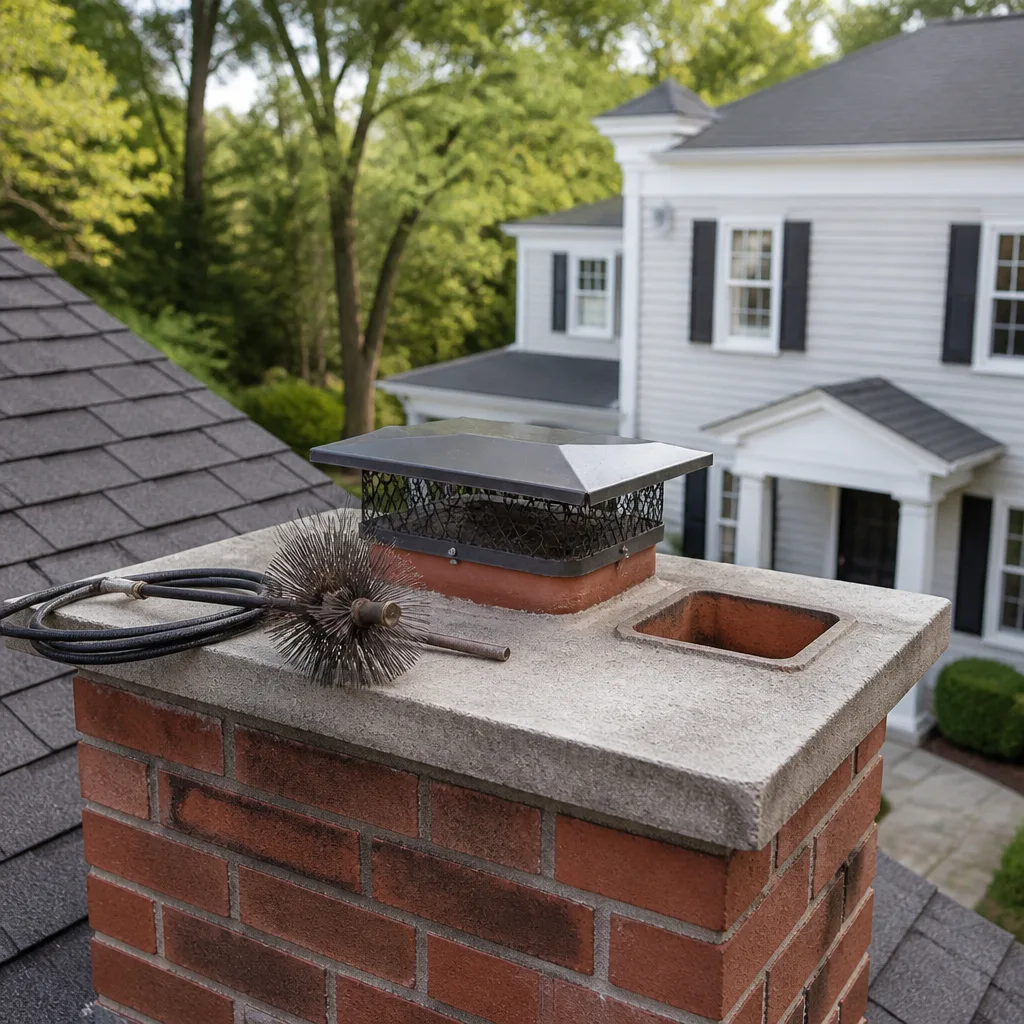 Sweep & inspection
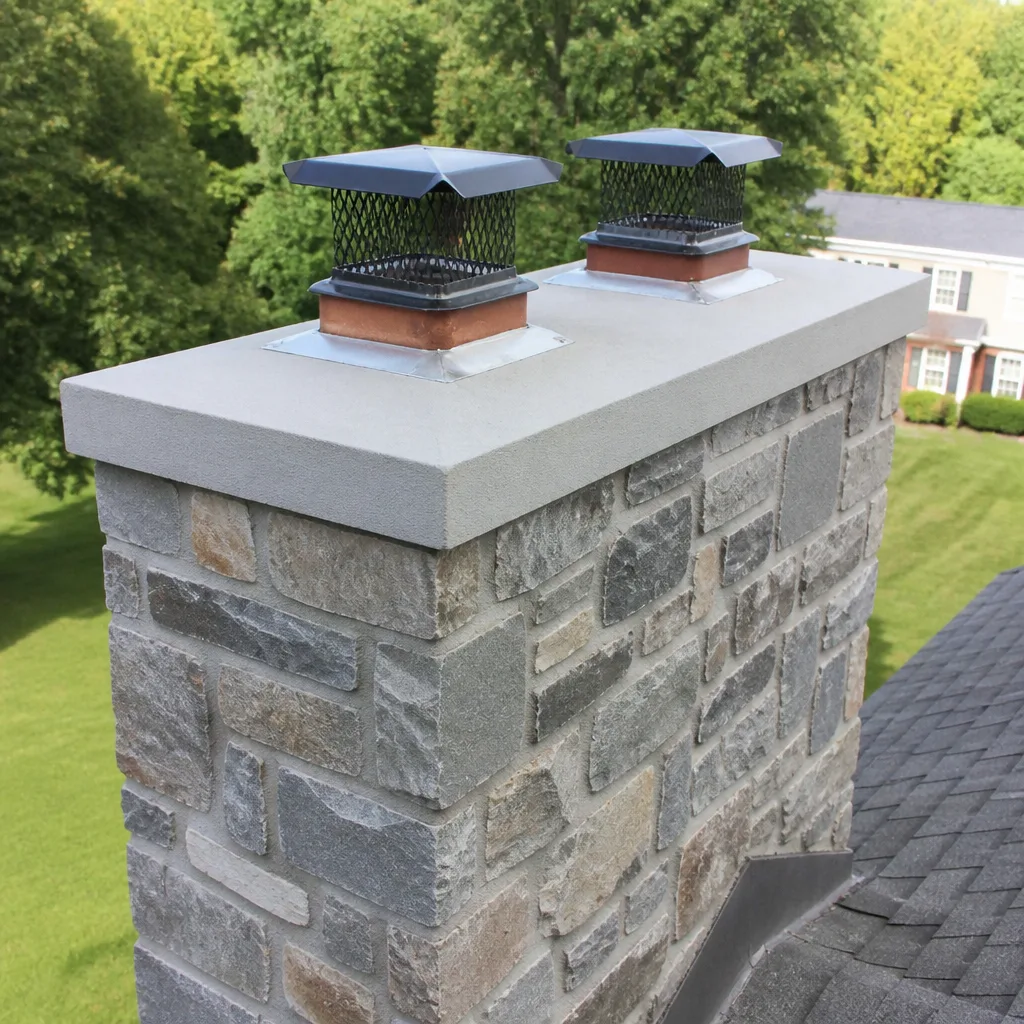 Caps & crowns
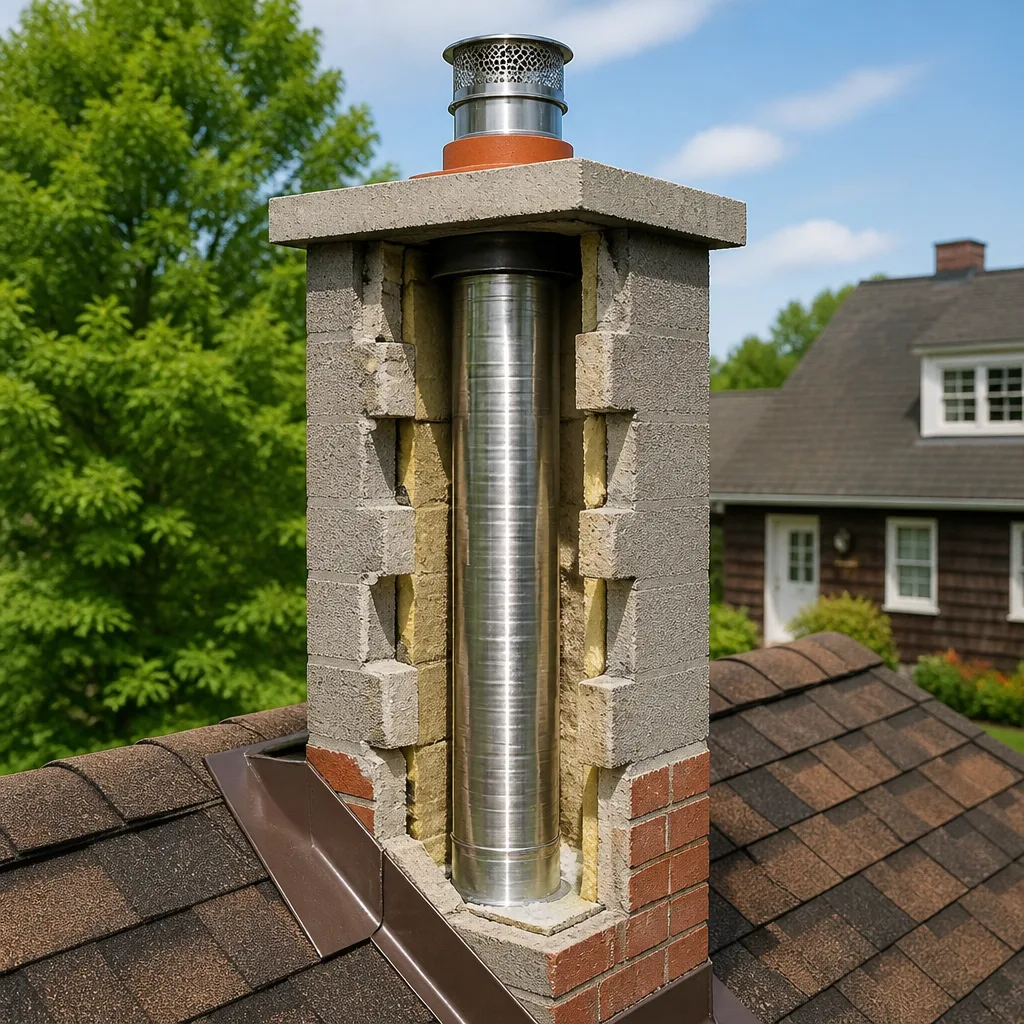 Flue relining
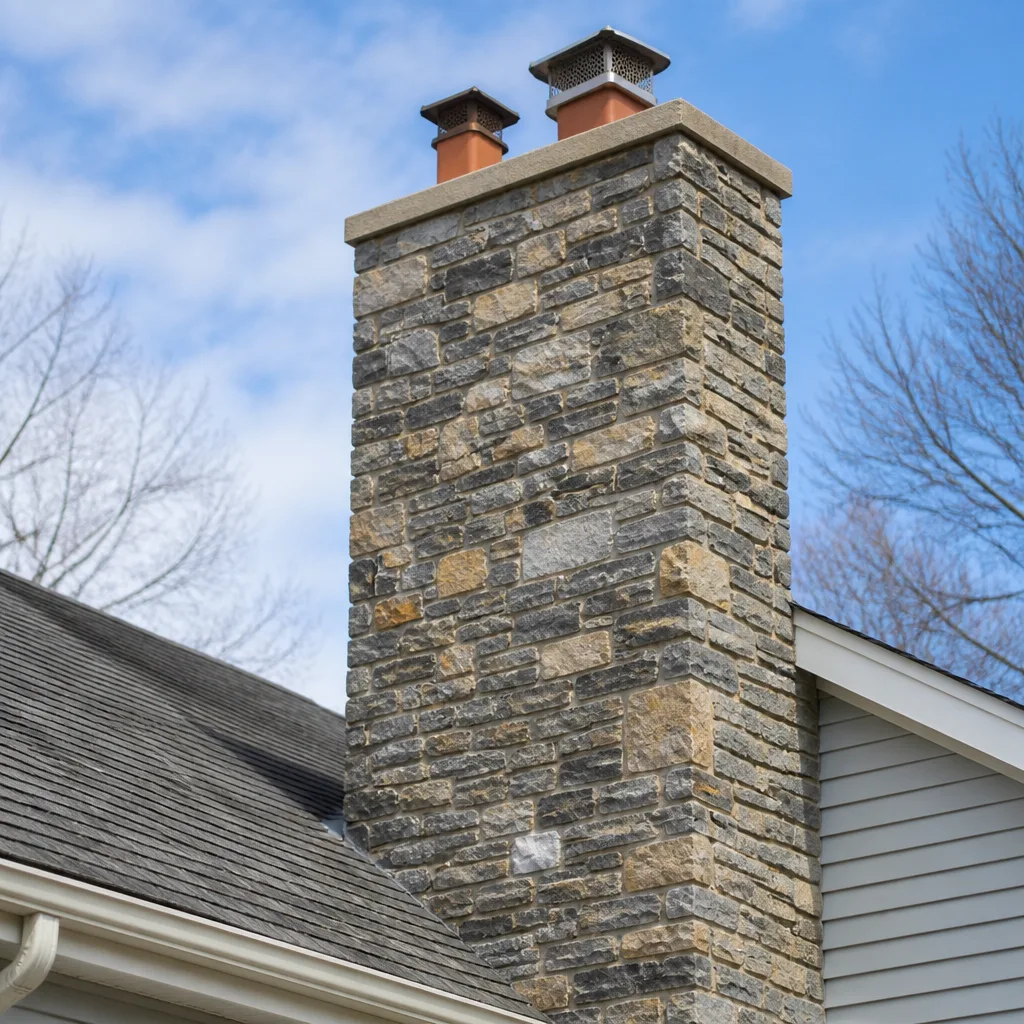 Masonry repair
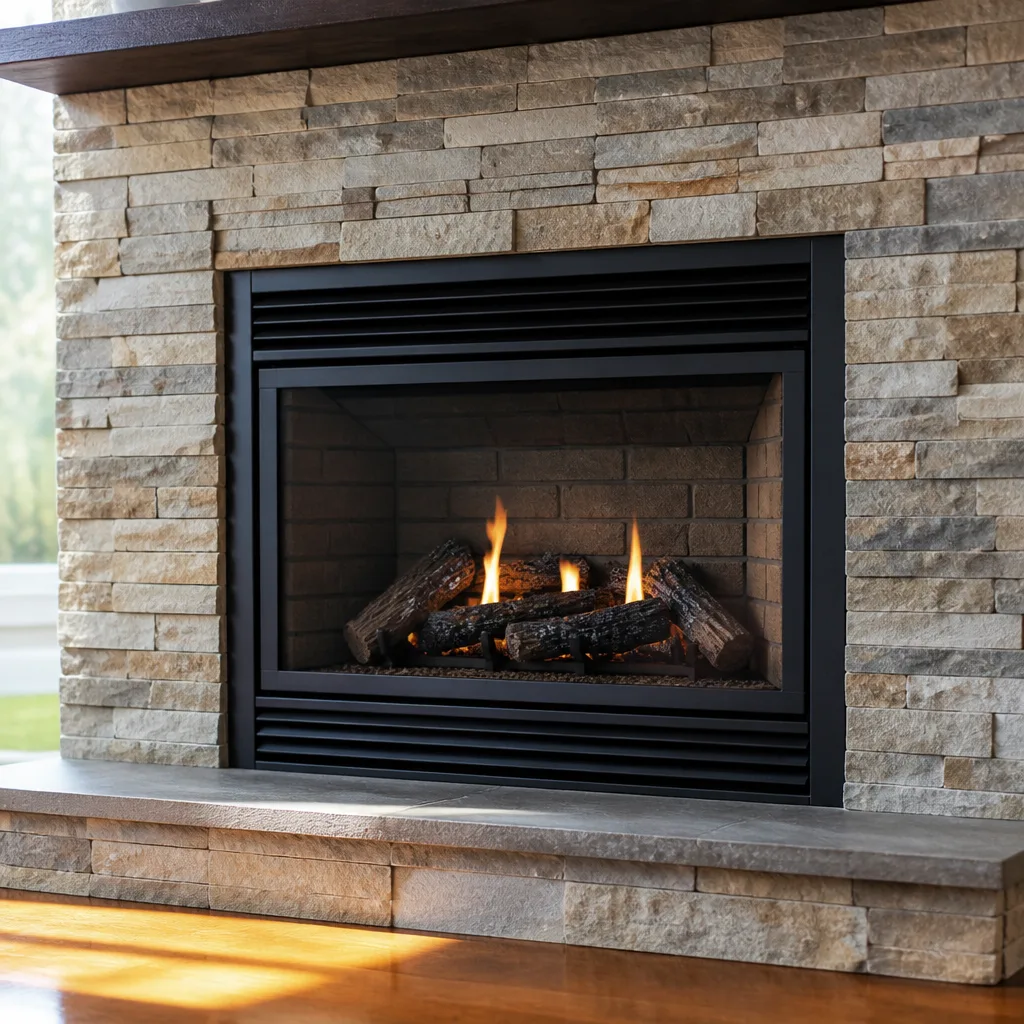 Gas fireplace service
Level 1 sweep and inspection to the NFPA 211 annual standard - flue, crown, cap, and flashing checked and photographed
Chimney sweep logs do not sweep chimneys. They loosen some creosote - which then falls where a brush and vacuum still have to collect it.
Choosing the Right Chimney Cleaning Brand: A Buyer’s Guide for Raleigh
There’s no visible difference between a chimney cap installed with professional-grade stainless steel and one installed with a commodity import – until the second or third winter, when the commodity version starts to pit and rust through. The same gap exists in liner systems, mortar, and sealants, and it’s invisible on the day of installation. Most homeowners never ask what products a contractor plans to put inside their chimney, which is exactly what lower-quality operators count on. In this guide, we’ll walk through the product categories where brand actually matters, the names certified technicians rely on, and the questions that separate a real chimney professional from a sweep-and-run operation in Raleigh.
Quick Answer
The right chimney cleaning brand isn’t about who sweeps your flue – it’s about what materials they install. A contractor who uses professional-grade products like HeatShield for liner resurfacing, DuraFlex for flexible stainless relining, and trusted component brands such as Olympia Chimney, Famco, and Copperfield will give you a repair that lasts decades. A contractor using generic hardware-store substitutes will give you the same repair with a fraction of the lifespan. Ask what they use before you book, and treat a vague answer as a red flag.
Styles & brands we work with
- Sweep & inspection
- Caps & crowns
- Flue relining
- Masonry repair
- Gas fireplace service
Table of Contents
- Why the Brand Behind the Sweep Matters More Than the Sweep Itself
- The Four Product Categories Where Brand Actually Matters
- Brands That Certified Chimney Technicians Rely On
- Why the Same Repair Can Last 5 Years or 20
- How to Ask a Contractor What They Use (And What Answer Should Disqualify Them)
- The Link Between Material Grade and Warranty Coverage
- Raleigh-Specific Considerations: Humidity, Older Housing Stock, and Code
- Red Flags in Chimney Contractor Marketing
Why the Brand Behind the Sweep Matters More Than the Sweep Itself
Anyone can run a brush down a flue. The sweep itself is largely a mechanical process – remove creosote, check for obstructions, report what’s found. Where contractors genuinely diverge is in what happens next. When a sweep finds a cracked flue liner, a rusted damper, crumbling mortar at the smoke chamber, or a cap that’s lost its screen, the quality of the repair depends almost entirely on the materials the contractor chooses to bring. That decision is where the brand question lives.
A chimney sweep visit is a diagnostic exercise. The repair visit is where the long-term investment gets made. And the products used in that repair are rarely visible to the homeowner afterward – they’re sealed behind masonry and buried inside a flue. You won’t see them again until something fails.
In our experience, the contractors who talk openly about their materials are the ones who’ve invested in them. A sweep-only operator will typically hand you an inspection report, say “you need a new liner,” and then leave you to find someone else to do the work. That’s not a chimney professional – that’s a diagnostic service. A full-service contractor stocks the products, uses them, and stands behind the result.
Here in Raleigh, this distinction matters because our climate makes chimney systems work harder than in drier parts of the country. Long humid summers sit inside masonry for months, then heating season arrives and the flue swings between hot and cold. Materials that hold up in Arizona may not hold up here. Professional-grade products are formulated to handle that cycling. Commodity products often aren’t.
The Four Product Categories Where Brand Actually Matters
Chimney work involves dozens of components, but four categories carry most of the long-term performance risk. If you’re going to ask a contractor about one thing, ask about these.
1. Liner Systems
The flue liner is the single most important component in your chimney. It channels combustion gases up and out, and it protects the surrounding masonry from heat and moisture. A cracked or deteriorated liner lets carbon monoxide and other combustion byproducts into the home – this is a genuine safety issue, not a sales tactic.
Liner systems come in two basic families. Rigid stainless liners work well in straight, well-maintained flues. Flexible stainless liners – like those made by DuraFlex – can navigate offsets, bends, and aging chimney interiors that rigid liners simply can’t reach. Some chimneys that a rigid-liner installer would walk away from can be properly relined with a flexible system.
There’s also a third option worth knowing about. HeatShield is a ceramic resurfacing product that restores a damaged clay liner from the inside, effectively building a new flue surface without a full tear-out. Not every liner qualifies, but for many damaged liners this is a durable middle-ground between a patch and a rebuild.
2. Chimney Caps
Caps keep rain, animals, and debris out of the flue. A properly made stainless cap can last the life of the chimney. A commodity cap will rust, warp, or lose its screen within a few seasons. In Raleigh’s humid climate, unprotected steel components fail far faster than they would in a dry market. Ask whether the cap is stainless or galvanized – that single question tells you a lot.
3. Mortar and Masonry Products
Crown repair, tuckpointing, and smoke chamber work all depend on the mortar. A generic mortar mix pulled off a hardware-store shelf may look fine on day one and crumble within a few freeze-thaw cycles. Professional-grade refractory mortar is formulated for the heat and thermal cycling a chimney experiences. The same repair done with the right mortar and the wrong mortar can differ in lifespan by a factor of three or more.
4. Sealants and Adhesives
High-temperature sealants connect liner sections, seal caps, and close gaps around the top plate. Standard construction adhesive will fail at chimney temperatures. The right sealant stays flexible through thousands of heating cycles. This is the smallest cost line in most repairs and the one most likely to be substituted with whatever’s on the truck.
Brands That Certified Chimney Technicians Rely On
Certified chimney professionals across the country tend to converge on a small set of trusted manufacturers. These brands aren’t household names, but they’re standard in the trade for a reason. Here are the ones we stock and use.
HeatShield
HeatShield is a ceramic-based liner resurfacing system. It’s applied to the interior of a damaged clay flue to create a smooth, durable new surface, effectively extending the life of a liner that would otherwise need full replacement. For many homeowners, HeatShield is the difference between a costly rebuild and a repair that lasts. We use HeatShield, not generic patching compounds.
DuraFlex
DuraFlex manufactures flexible stainless steel liner systems. These are the liners that work when the flue has bends, offsets, or an interior in rough shape. Rigid liner installers turn these jobs down. DuraFlex makes them possible.
Olympia Chimney
Olympia Chimney is a trusted name in chimney components – caps, liners, and fittings. Their products are engineered for long service in real-world chimney conditions.
Famco
Famco produces chimney caps and related accessories. When we install a cap, it’s often a Famco product, because the build quality holds up over time.
Copperfield
Copperfield makes chimney caps and component systems – including copper caps that age gracefully in humid climates like Raleigh’s. For homeowners who want a cap that will last the life of the chimney, this is the standard.
None of these brands sell through big-box retailers. That’s the point. You’ll find them through professional chimney supply channels, installed by contractors who’ve chosen to work with this caliber of material. When a contractor tells you they source from a home improvement store, they’re telling you what to expect from the repair.
Why the Same Repair Can Last 5 Years or 20
The scariest thing about chimney work is that it’s hard to tell a good repair from a bad one until years later. Two contractors can quote the same relining job at similar prices and produce results that differ in lifespan by a decade or more. The reason is almost always materials.
Consider a liner repair. This involves the following:
- Assessment: Inspect the flue interior, confirm the liner’s condition, and pick the appropriate method (resurfacing, flexible reline, or full replacement).
- Material selection: Choose the liner system – HeatShield for resurfacing, DuraFlex for flexible relining, rigid stainless for straight runs.
- Installation: Apply or install the liner system with the correct sealants and connections.
- Verification: Confirm the liner is continuous, sealed, and free of gaps.
Every step allows a shortcut. A contractor can skip the verification. They can substitute a cheaper sealant. They can use an import liner that looks identical to a professional one on the day of install. All of those decisions fail the same way: not in year one, not even in year two, but in year five or six when the first hard winter exposes the difference.
In Raleigh, our humid summers add another failure mode. Moisture gets into the chimney between heating seasons, and materials that aren’t rated for that exposure degrade faster. A commodity sealant or cap will often show first-stage failure by the third season here. A professional-grade product from Olympia Chimney or Famco, installed correctly, will last decades.
Here’s what that means in practice: the total cost of the cheaper repair, amortized across its lifespan, is often higher than the professional-grade repair. And the professional-grade repair comes with fewer surprises – no second crew showing up five years later to fix what the first crew installed.
How to Ask a Contractor What They Use (And What Answer Should Disqualify Them)
Most homeowners never ask this question, which is why substandard work is so common. It’s a simple conversation, and it tells you a lot. Here’s how to have it.
Step 1: Ask the question directly, on the phone
“What brands of chimney products do you install?” That’s it. No preamble. The answer will fall into one of three buckets.
Step 2: Listen for the answer
When the technician or office staffers answer, you’re looking for one of these patterns:
- Specific brand names you can look up: This is a strong positive signal. If they name HeatShield, DuraFlex, Olympia Chimney, Famco, or Copperfield, that’s a contractor who has chosen their materials deliberately.
- Category descriptions in awkward vagueness: “We use professional-grade products” with no specifics. Ask a follow-up: “Which brands?” If they still can’t name anything, they’re likely picking up whatever the supply house has on sale.
- An admission of retail sourcing: “We use whatever’s at Home Depot” or “we source locally.” This is the disqualifying answer. A chimney repair is a specialized job, and the materials have to match. Retail-grade products aren’t engineered for chimney temperatures and cycling.
Step 3: Ask about the warranty
If they name a brand, ask whether the manufacturer’s warranty applies to the installed product. If the answer is vague or dismissive, the products may be secondhand, discontinued, or counterfeit. If they say something like “we warranty the labor for a year,” that’s a labor-only warranty on a product that could fail in year two. See the next section for why this matters.
Step 4: Ask what happens if the repair fails
This question separates the full-service contractors from the sweep-only operations. A reputable contractor will explain how they stand behind their work, what the warranty includes, and what the process is for a return visit. A sweep-only operator will say something like “we only do sweep inspections, so that’s not our department.” That’s a legitimate business model – but it’s not the model you want when you need a repair.
If you’re in Raleigh and want to run this conversation with our team, call (833) 304-2125. We answer 24/7, and we’re happy to talk through materials before you book anything.
The Link Between Material Grade and Warranty Coverage
Material grade and warranty coverage are directly connected – and this is a piece of the industry most homeowners never hear about. When a contractor installs a professional-grade liner and offers a warranty, that warranty is usually backed by a manufacturer who stands behind the product. When a contractor installs a commodity product and offers a warranty, the warranty is either labor-only or effectively unenforceable because the manufacturer won’t honor a claim on a product they can’t verify was correctly installed by a qualified installer.
In practice, this means:
- Professional-grade products: Manufacturer warranties that cover material defects, plus installer warranties on the workmanship. Both parties stand behind the result.
- Commodity products: A labor warranty from the contractor. If the product fails, the contractor may not be able to collect from the manufacturer, and the homeowner absorbs the material cost of the replacement.
- Gray-market or discontinued products: Often no warranty at all. The contractor is on the hook entirely, which means in practice the warranty is worth whatever the contractor’s willingness to absorb a loss is worth.
The catch: warranties are only as good as the product. A contractor who claims a “20-year warranty” on a liner they can’t name is offering you a paper promise. Always ask what brand the warranty covers – and read the fine print carefully if they hand you anything in writing.
This is one of the reasons we stock a specific roster of brands. When a repair uses a HeatShield system or a DuraFlex liner, the material itself is covered. The workmanship warranty is layered on top. Both parts of the promise are real.
Raleigh-Specific Considerations: Humidity, Older Housing Stock, and Code
A few things about Wake County and the surrounding area shape how chimney work plays out here. If you’re in the market for chimney services anywhere in Raleigh, these are the specifics that matter.
Humidity and the Summer-to-Heating-Season Swing
Raleigh summers are long and humid. Moisture sits in masonry for months before heating season begins. Then the first fire of the year drives all that moisture out through the chimney, which stresses everything from mortar to sealants to the flue liner itself. This is why we see more liner deterioration here than in drier climates, and why professional-grade materials – not retail substitutes – are the right call. A commodity crown mortar that looks fine in September will often be cracked by February.
Older Housing Stock and Complex Flues
Many Raleigh homes – especially in established neighborhoods like Raleigh‘s Five Points, Oakwood, Boylan Heights, and the areas around Cameron Park – were built well before the current generation of liner standards existed. Their chimneys often have interior offsets, aging clay tile, and masonry that doesn’t cooperate with rigid liner installers. Flexible systems like DuraFlex are frequently the only viable option for these flues. For liners that are damaged but not structurally failed, HeatShield resurfacing is often a better answer than a full rigid replacement.
Permits and Code
Most larger chimney repairs here require a permit, and the specific requirements depend on the scope of the work. Ask your contractor how they handle permitting, and check with the City of Raleigh’s building department if you want to confirm. A contractor who shrugs off the permit question is telling you something.
Two Hidden Fire Hazards, One Visit
Chimneys and dryer vents are the two systems in most homes most likely to cause a fire, and both are out of sight. A lot of Raleigh homeowners schedule one of them and forget the other. We handle dryer vent cleaning alongside chimney work for that reason – one call, both systems checked, fewer blind spots in the house.
Red Flags in Chimney Contractor Marketing
The chimney industry has a problem with low-information customers being sold more than they need. A few warning signs to watch for when you’re evaluating contractors in the Raleigh area.
A sweep who tells you on the first visit that you need a full liner rebuild without showing you photos or video of the inside of the flue is asking you to take their word for it. A reputable chimney sweep will show you evidence – typically a camera inspection with photos or a video you can watch. Nothing should be recommended without documentation you can see for yourself.
Similarly, watch for contractors who won’t talk about brands. If they’re cagey about what they install, that’s not because they’re protecting a trade secret. It’s usually because the answer isn’t flattering.
One more: a contractor who can only sweep. Sweep-only operators are useful, but they’re referrals, not repairs. When you’re told you need work, you want to be talking to someone who can do the work themselves and stand behind it. This matters in Raleigh where chimney repair demand is steady and the referral chain can be slow.
For a deeper look at what a professional sweep visit should include, see our chimney sweep page – it walks through what you should expect from a properly done inspection.
Common Mistakes to Avoid
- Booking the cheapest quote without asking about products. Two quotes can look identical on paper while one uses HeatShield and the other uses a discount patching compound. Always ask what’s being installed before you decide.
- Assuming the cap is the cap is the cap. Raleigh’s humidity is rough on caps that aren’t stainless. A galvanized cap will show rust within a couple of seasons here, while a Famco or Copperfield cap will hold up for decades.
- Accepting a repair recommendation without seeing photos. Any reputable chimney sweep in Raleigh will document what they find with camera inspection and photos. If you’re told you need work but haven’t been shown the evidence, ask to see it before you book.
- Using a sweep-only operator for a repair. A sweep-only service will identify the problem and hand you off to someone else. That’s a valid model, but it leaves you coordinating two contractors and losing continuity. A full-service operation handles both.
- Assuming “certified” always means the same thing. Certification varies by organization and isn’t a perfect proxy for quality. Ask about the materials the contractor uses – that’s a much more reliable signal.
- Ignoring the dryer vent. Homeowners who maintain their chimney frequently forget the dryer vent entirely. Both are hidden fire hazards, and both deserve a check during the same visit.
- Believing the “20-year warranty” without reading what it covers. A warranty is only as good as the product behind it. If the contractor can’t name the brand, the warranty doesn’t mean much.
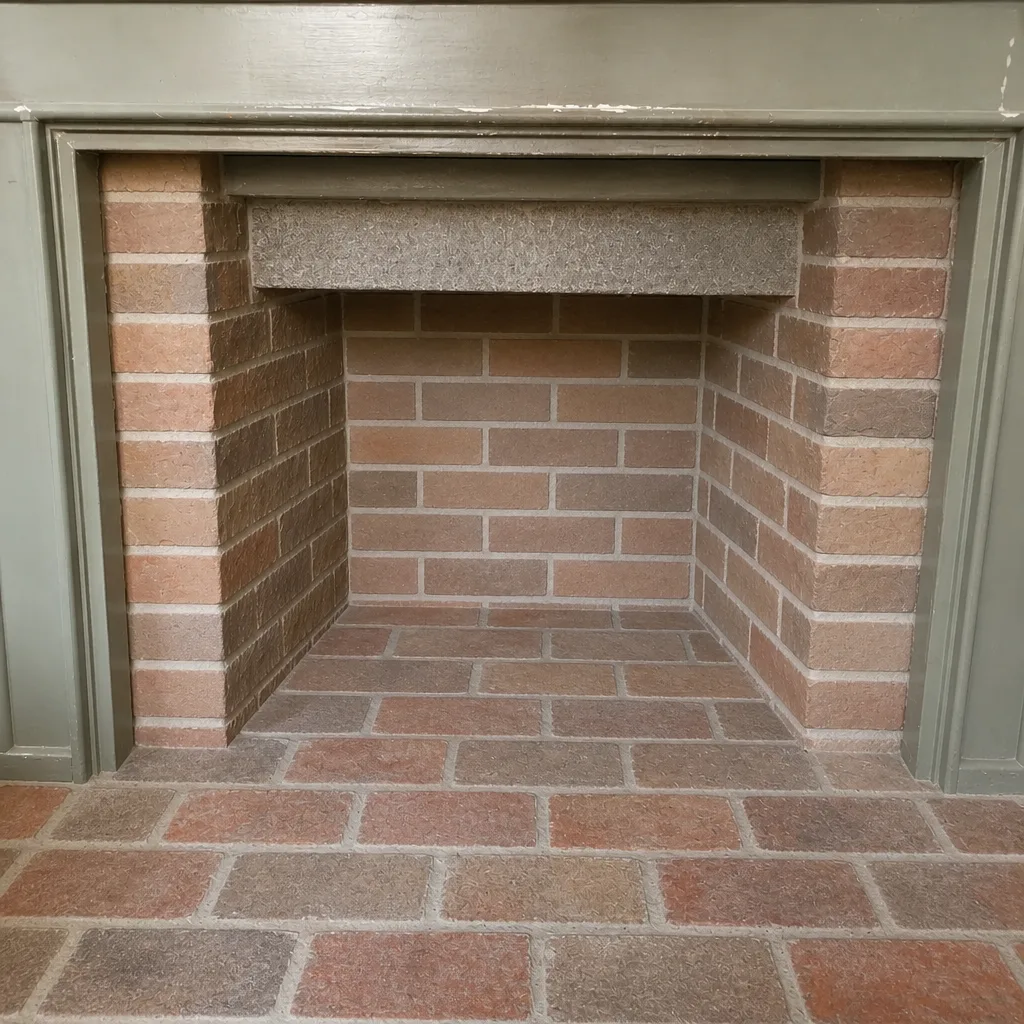
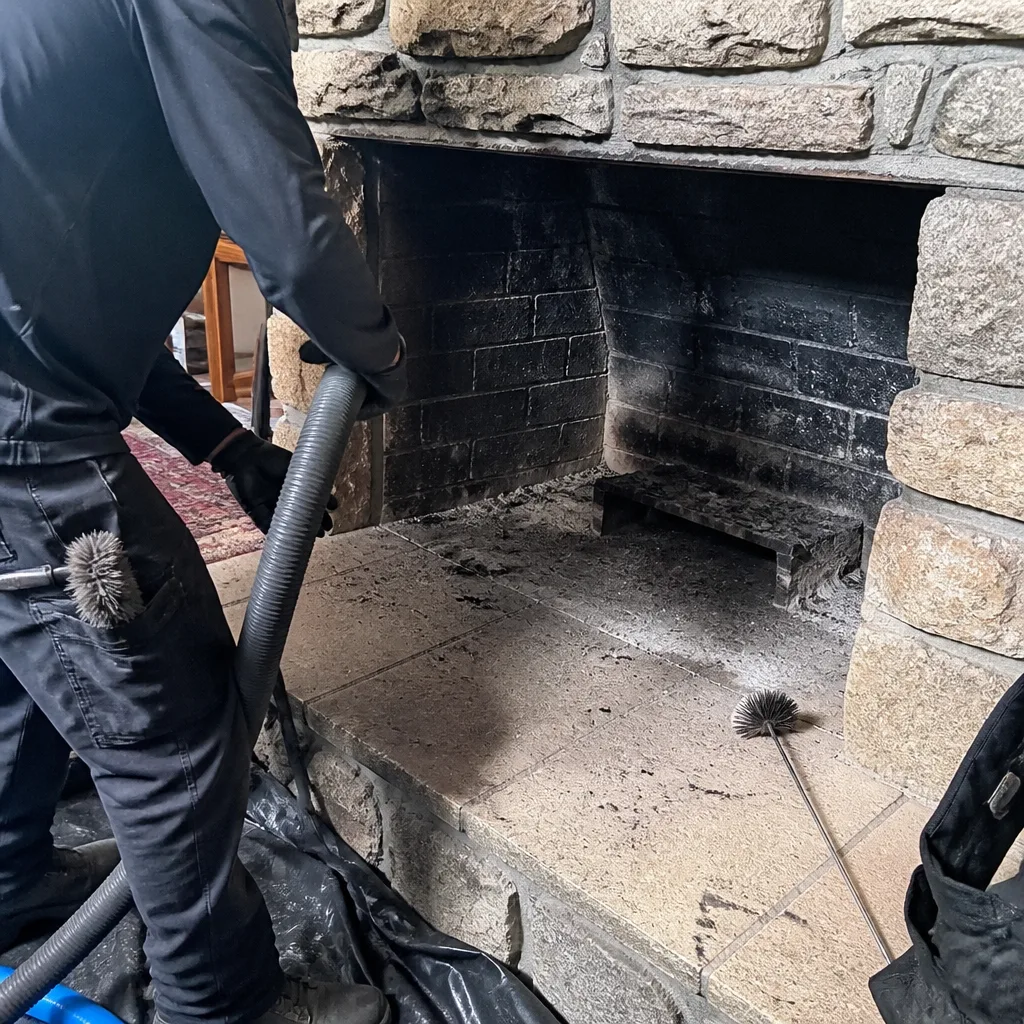
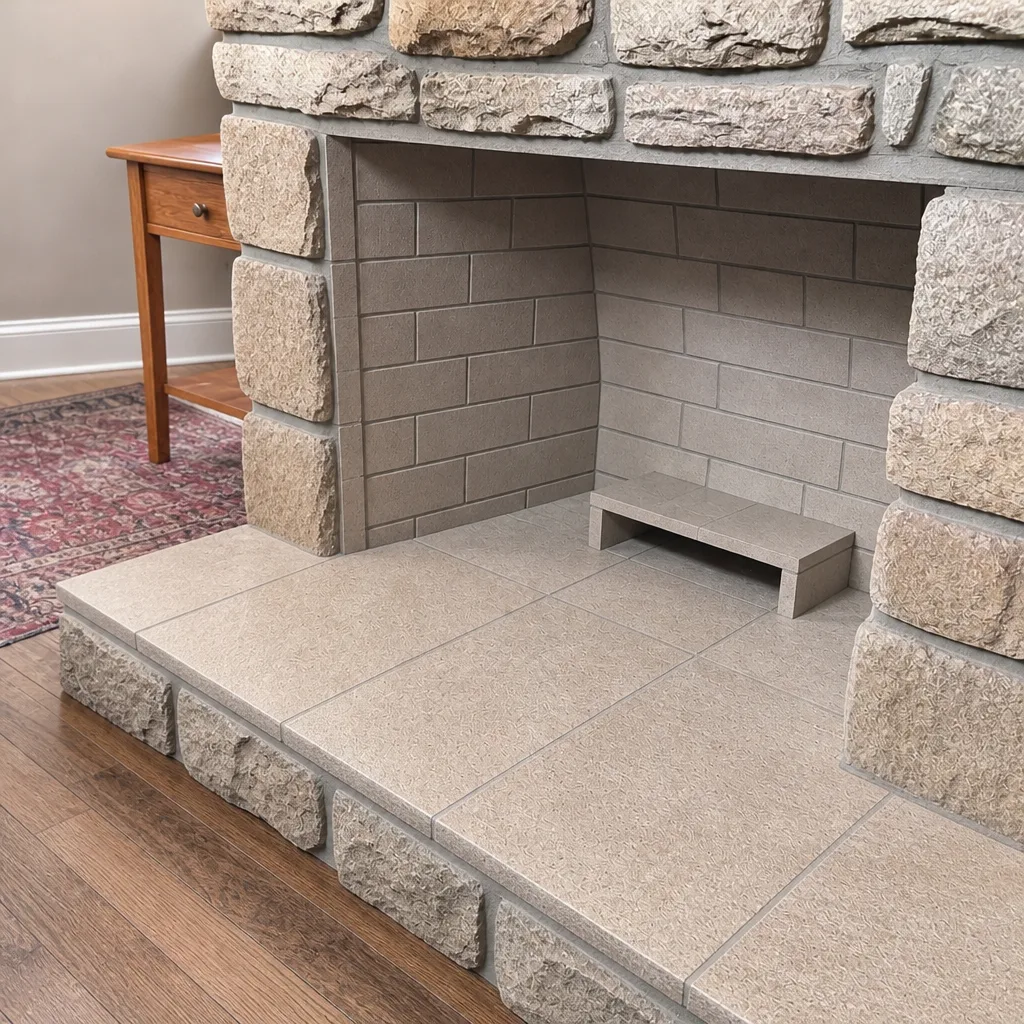
See the difference
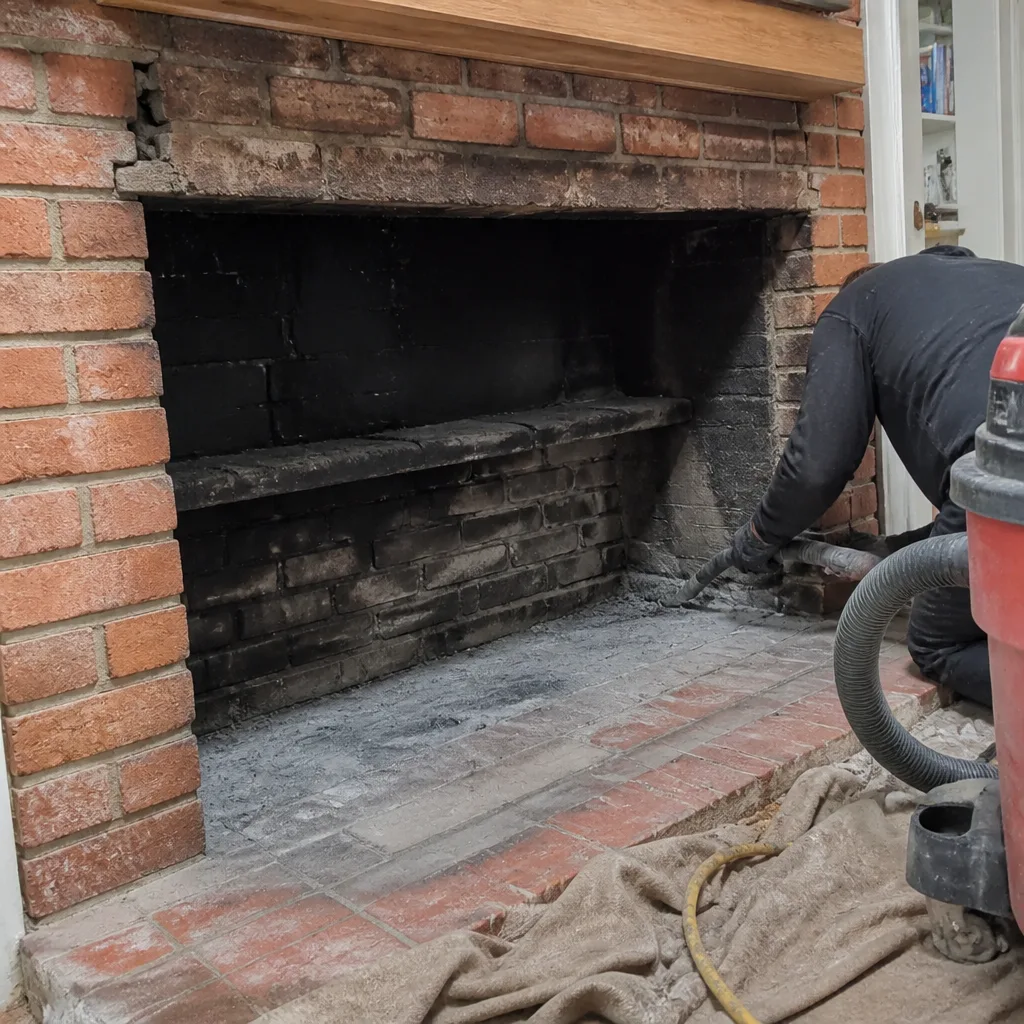 Before
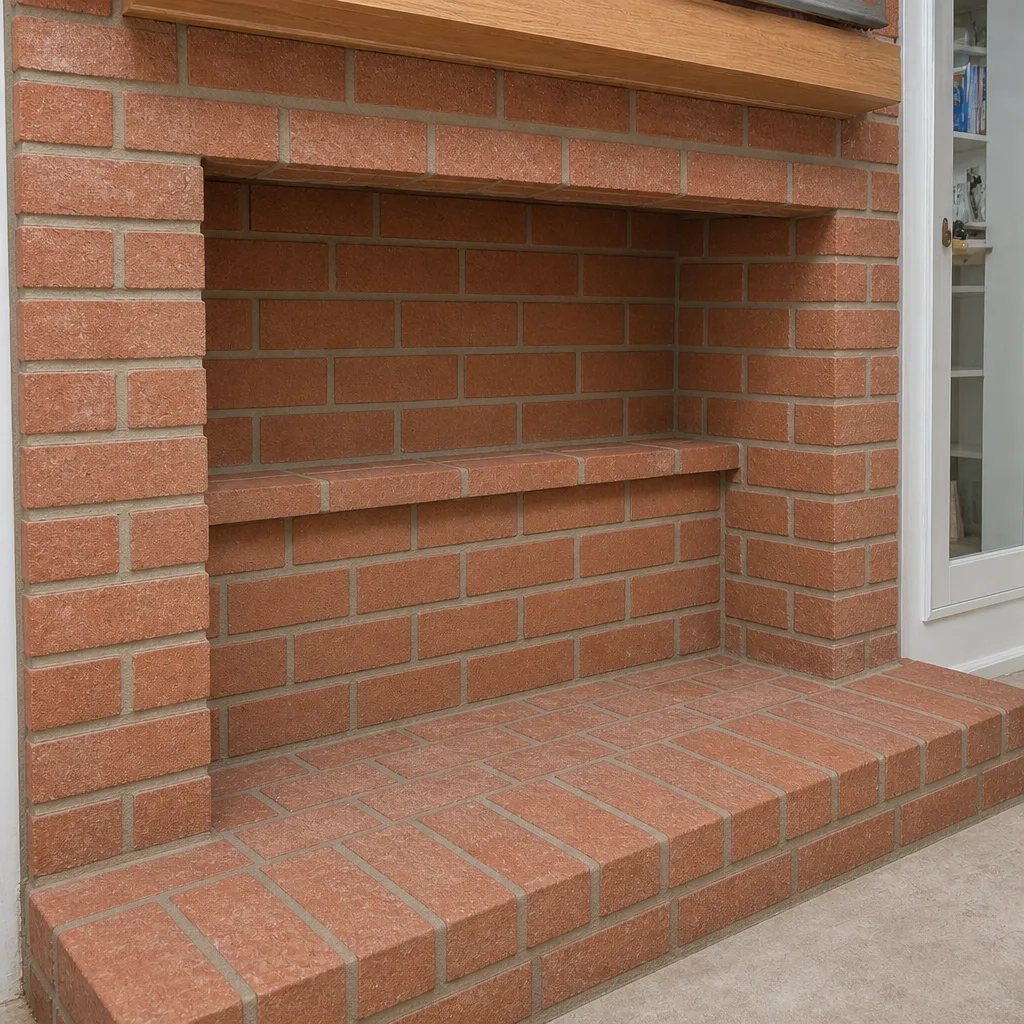 After
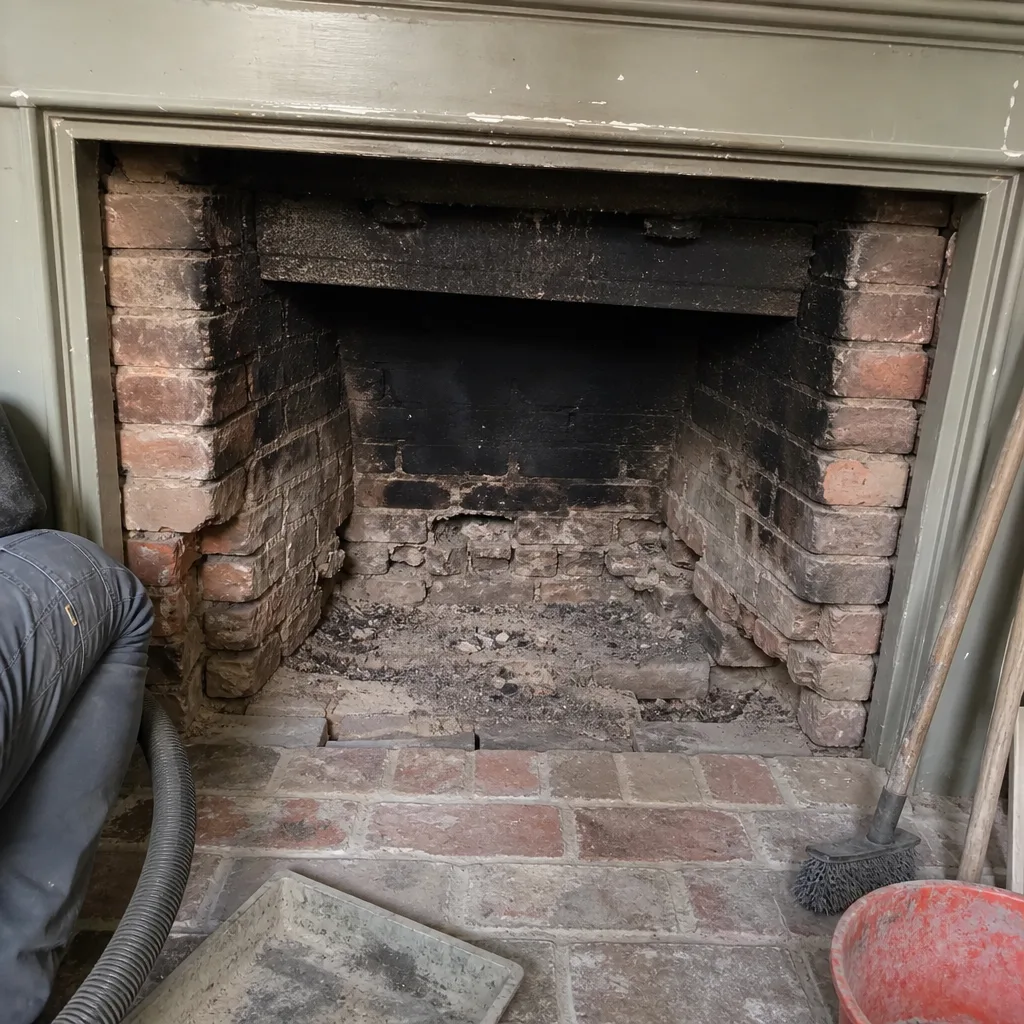 Before
 After
 Before
 After
When to Call a Professional
Some situations call for a sweep; others call for a closer look at the chimney’s structure. Call a professional if you’ve moved into a home with a chimney whose service history is unknown, if you’re noticing odors from the firebox in warm weather, if the fire doesn’t draft well, if you see any sign of moisture around the chimney or ceiling, or if it’s simply been more than a year since the last sweep. Also call if you’re considering a repair and want to know whether HeatShield resurfacing might work instead of a full liner replacement.
Raleigh Chimney Cleaning offers free estimates in Raleigh – call (833) 304-2125. We answer 24/7, with fast dispatch from 7am to 7pm, Sunday through Friday.
Our Raleigh chimney cleaning team handles sweep, repair, and dryer vent work under one roof, using the same professional-grade brands described in this guide. If you want to see how a visit works before you book, chimney sweep walks through the whole process.
Frequently Asked Questions
Ask specifically about HeatShield for liner resurfacing, DuraFlex for flexible stainless relining, and Olympia Chimney, Famco, or Copperfield for caps and components. These are the trade-trusted brands certified chimney professionals use. If the contractor can’t name any of them, that’s a signal they’re sourcing from retail rather than professional supply – call (833) 304-2125 if you’d like to talk through your specific situation.
Yes, in Raleigh specifically, because the local climate stresses chimney materials more than most markets. Long humid summers followed by a heating-season dry-out cycle test sealants, mortar, and caps hard. Professional-grade products handle that cycling for decades; commodity products often fail within a handful of seasons. It’s the difference between a repair that lasts and a repair you redo.
We set chimney sweep pricing per job with a written estimate, so the final cost depends on your chimney’s size and complexity. Estimates are free, and the flat price is agreed before we book. Call (833) 304-2125 for an exact quote on your chimney – we’ll explain what the sweep will include and what it costs before you commit.
Often it can be restored rather than fully replaced. HeatShield resurfacing restores a damaged flue from the inside, creating a new ceramic surface without a costly full rebuild. Not every liner qualifies, but it’s a middle-ground option most sweep-only operators can’t offer. Call (833) 304-2125 and we’ll walk you through whether HeatShield is right for your chimney – and show you the camera evidence either way.
Once a year if you burn regularly, and more often if you burn often or use unseasoned wood. The reasoning isn’t complicated – creosote builds up year over year and gets harder to remove the longer it sits. If you can’t remember the last sweep, that’s your answer. Call (833) 304-2125 to schedule a visit and get the chimney on a known schedule.
Creosote accumulates and becomes flammable, which is the mechanism behind most chimney fires. Separately, a failing liner lets combustion gases into the home – that’s the carbon monoxide concern. Neither of these is a fear-sell; they’re the actual reasons chimney maintenance exists. If you’re overdue, call (833) 304-2125 and we’ll get you scheduled. We answer 24/7, with fast dispatch from 7am to 7pm, Sunday through Friday.
The Bottom Line
The brand behind your chimney repair tells you almost everything about how long the result will last. Ask contractors what products they install, listen for specific names like HeatShield, DuraFlex, Olympia Chimney, Famco, or Copperfield, and treat a vague answer as a reason to keep looking. The repair that uses professional-grade materials will cost roughly the same as the one that doesn’t on the day you write the check – but only one of them will still be working a decade from now. For homeowners in Raleigh, this is the single most useful question in the entire contractor selection process.
If you’re ready to talk about your chimney with someone who stocks the right materials, call Raleigh Chimney Cleaning at (833) 304-2125. Estimates are free, and we’ll show you exactly what we find before we recommend anything.
Written by the team at Raleigh Chimney Cleaning, serving Raleigh since 2013.